Joseph C. Rosenbaum
Joseph Rosenbaum, Holocaust Survivor
Video created by Philip Rosenbaum using Shoah testimony and found footage
Joseph C. Rosenbaum was born on October 30, 1922, in Radom, Poland, into a middle-class Jewish family of seven. Raised in a religious home by his parents, Isaac and Sarah Rosenbaum, Joseph grew up alongside his siblings in a community shaped by Jewish tradition, education, and strong family bonds. From an early age, however, his childhood was marked by the growing shadow of antisemitism. In public school, Joseph was frequently beaten by non-Jewish classmates while teachers stood by, offering no protection. These early experiences foreshadowed the far greater dangers that would soon engulf his life and the lives of millions of others.
With the outbreak of World War II and the Nazi occupation of Poland, the Rosenbaum family’s world was destroyed. Like so many Jewish families, they were forced into impossible choices as persecution intensified. One of the most defining moments of Joseph’s life came during a Nazi selection, when his mother made an unthinkable sacrifice. She gave Joseph her work papers—documents that would allow him to live—and sent him away with the words, “You are young and must survive.” It was the last time he ever saw her. Her courage and love became a guiding force in Joseph’s life, carried with him through years of suffering.
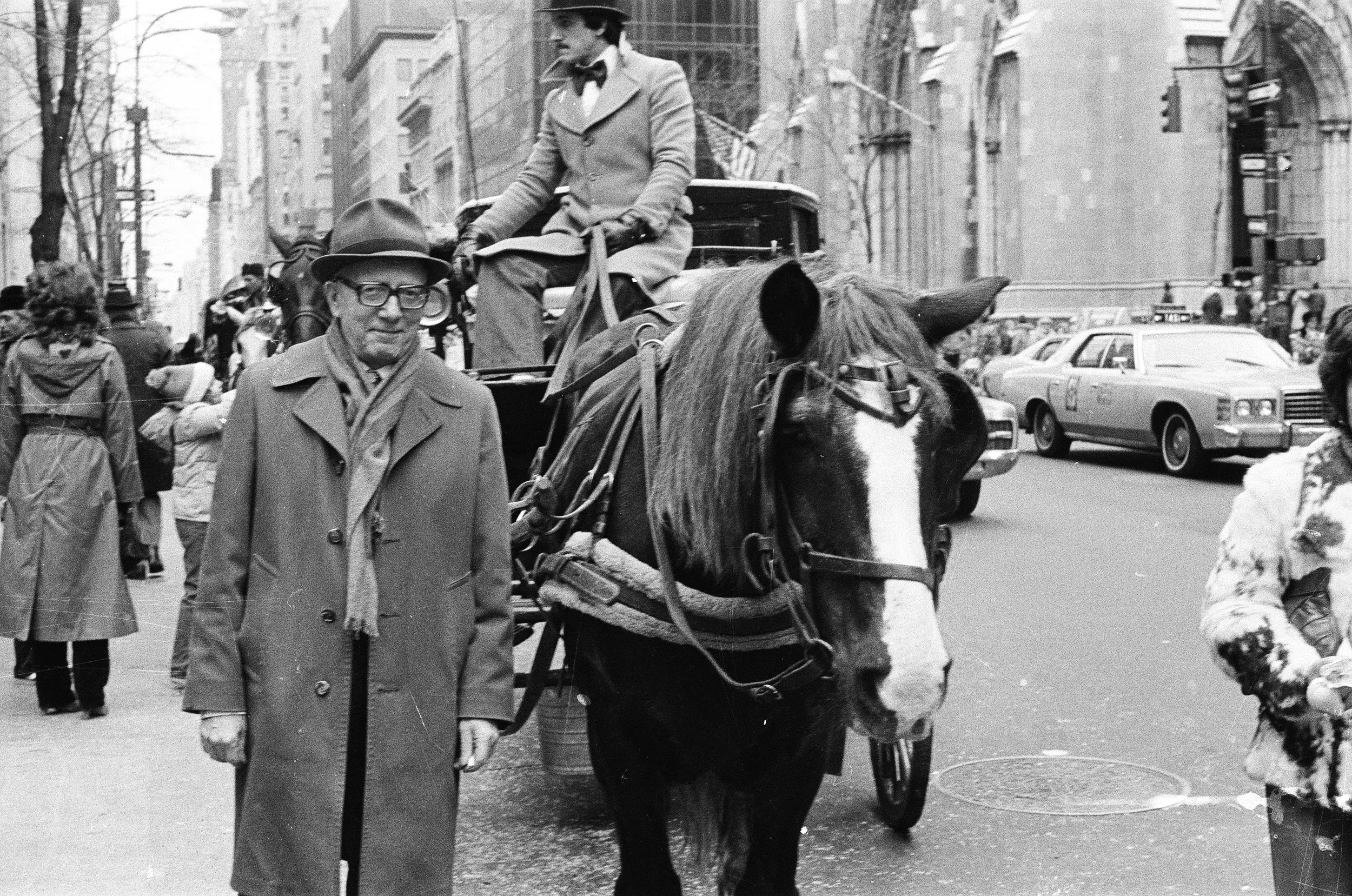
Joseph Rosenbaum, Fifth Avenue, NYC. Photograph by Philip Rosenbaum (Joseph’s son) in 1979 with a Pentax film camera that he received from his father for his bar mitzvah.
Joseph was deported to the Majdanek concentration camp, where he endured forced labor, starvation, brutality, and constant fear. The camp was a place of systematic dehumanization, where survival depended on endurance, chance, and will. During this time, Joseph lost nearly his entire family to the Holocaust. Their absence, and the weight of survival, remained with him long after the war ended.
After liberation, Joseph faced the immense challenge of rebuilding a life in the aftermath of catastrophe. Eventually, he immigrated to the United States, where he began the slow process of creating a future while carrying the memories of his past. Like many survivors, he lived for years with experiences that were difficult to speak aloud. Over time, however, Joseph recognized the importance of bearing witness.
Beginning in the 1980s, Joseph wrote extensively about his experiences during the Holocaust with the devoted help of his second wife, Christiane Rosenbaum. His memoirs were not only acts of remembrance, but also moral documents—testimonies meant to educate future generations and honor those who did not survive. Writing became a way to reclaim his voice and preserve the humanity that the Nazis had tried to erase. One of the great satisfactions of his later years was seeing his story translated and published in Brazil, a project led by his wonderful daughter-in-law Cristina Rosenbaum, fulfilling a long-held hope that his testimony would reach readers across the world.