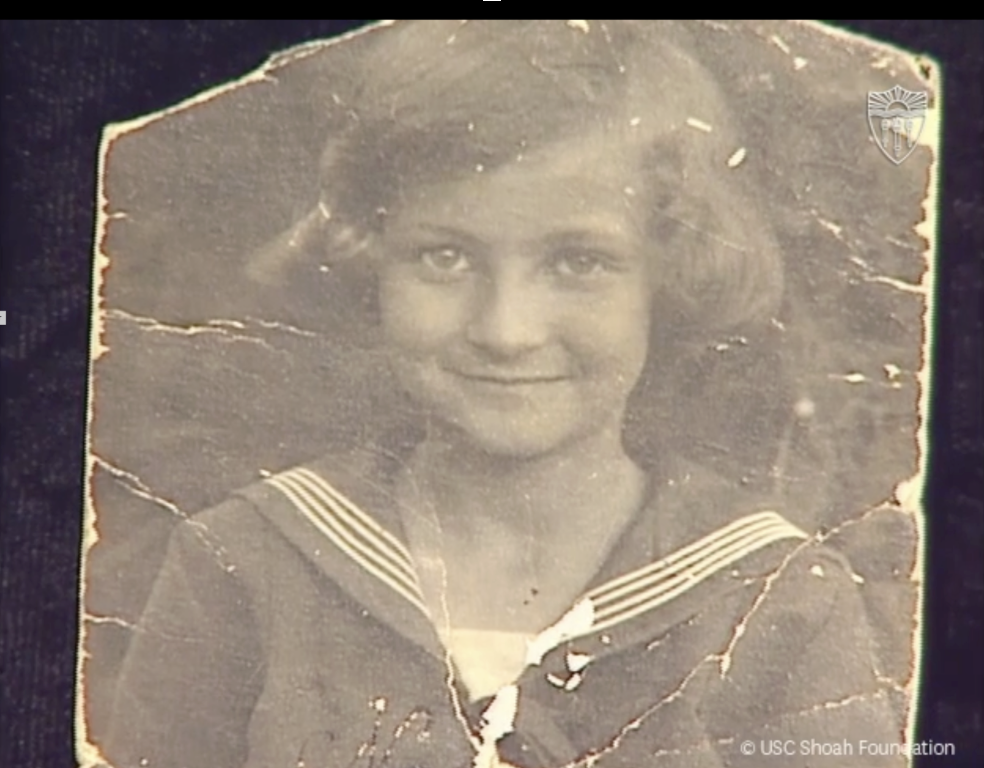
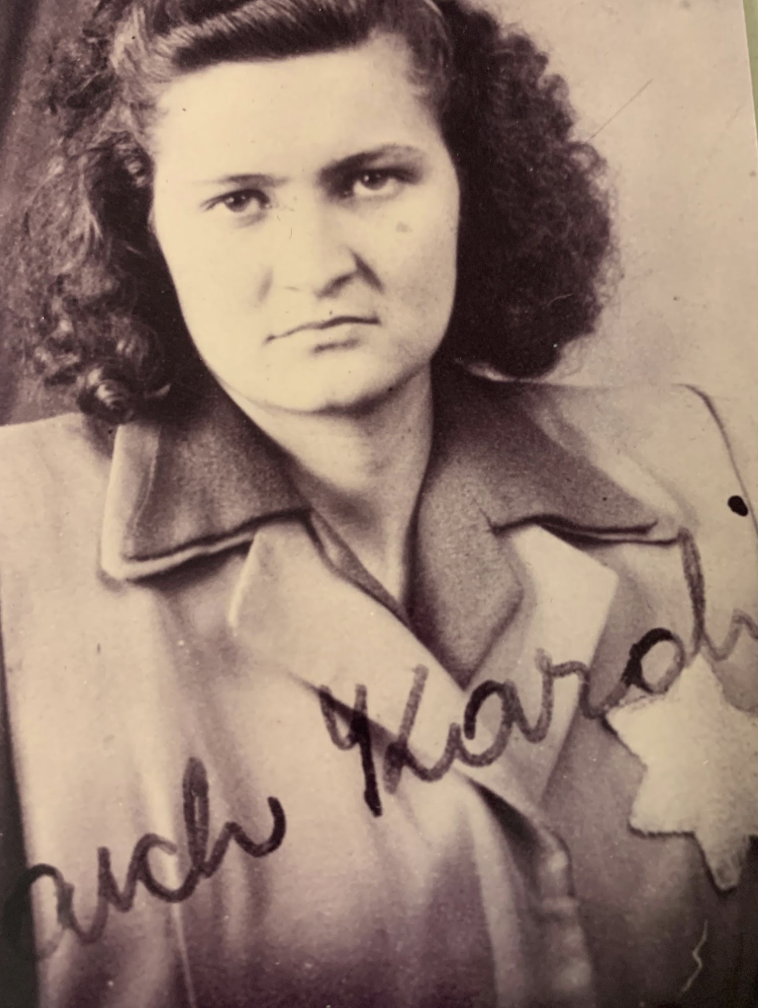
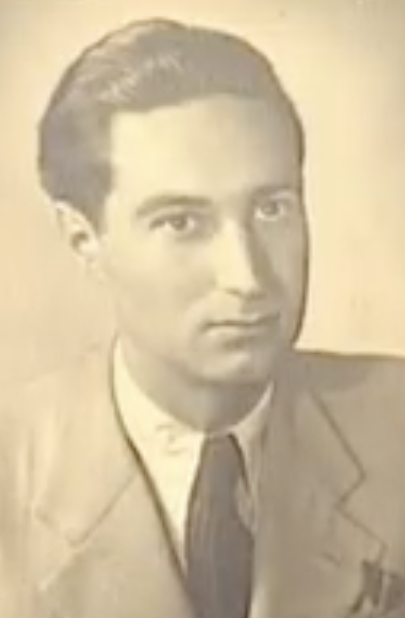
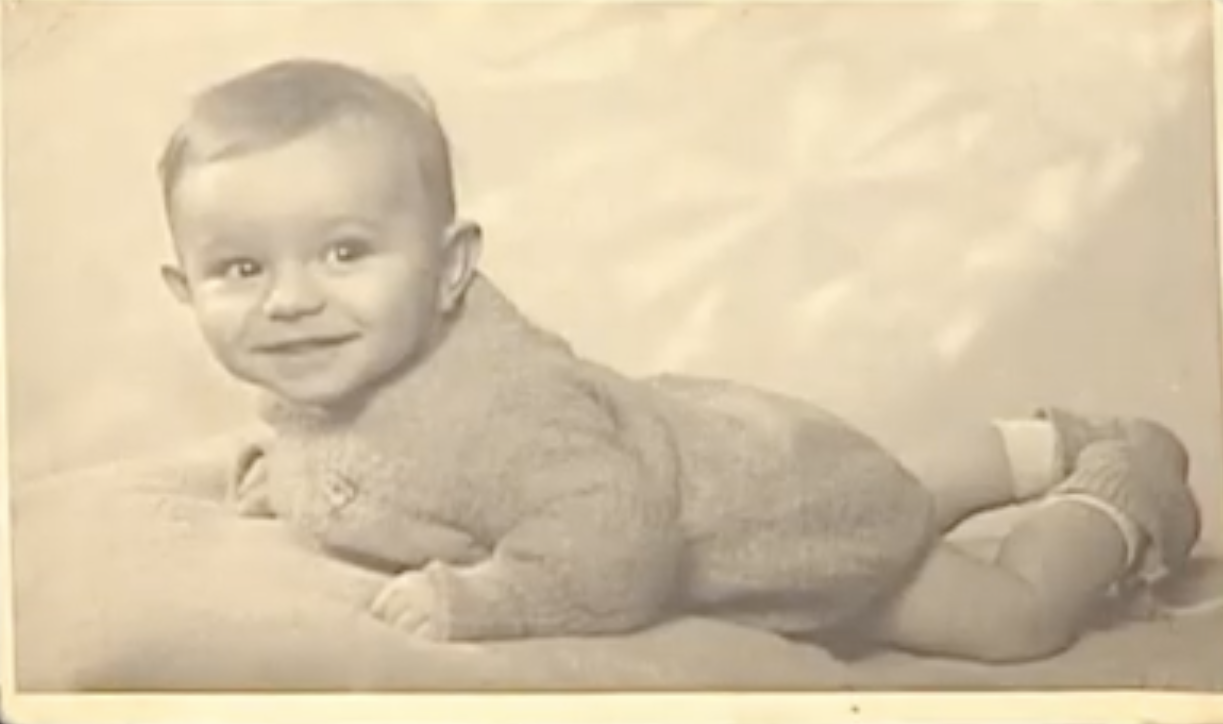
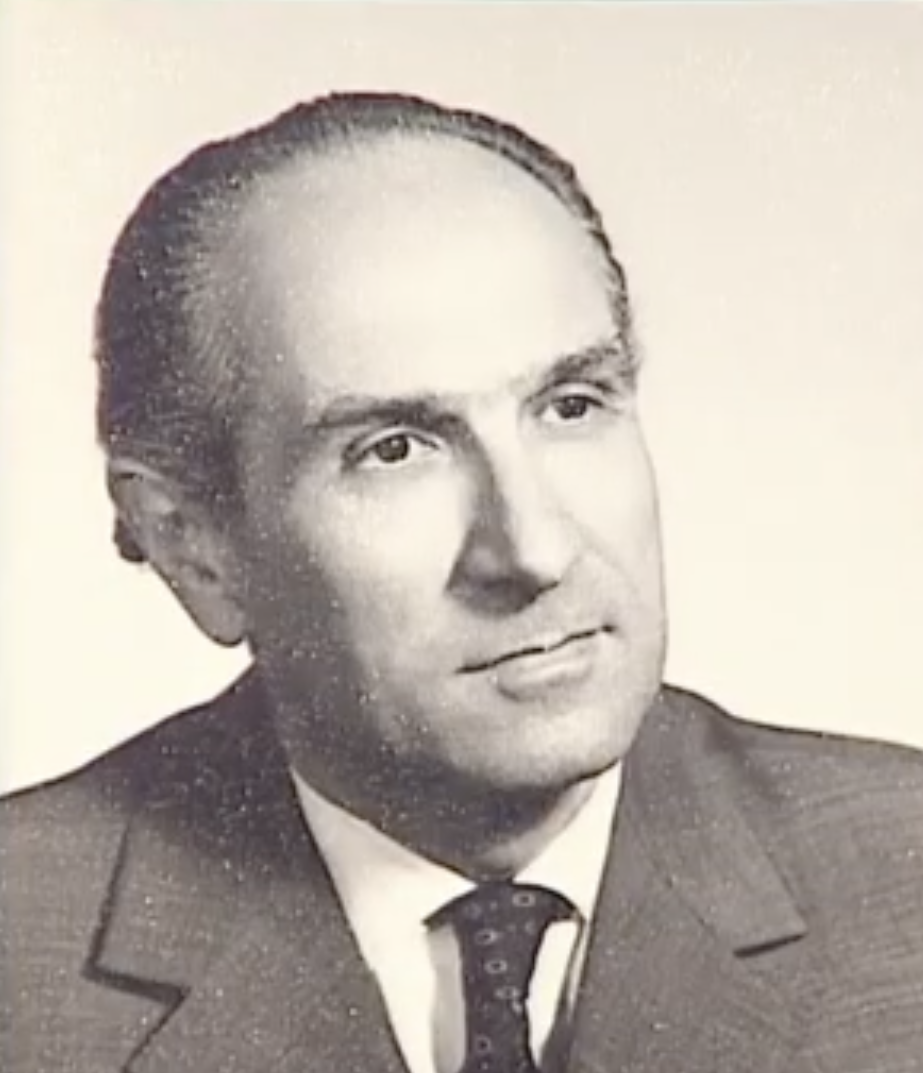
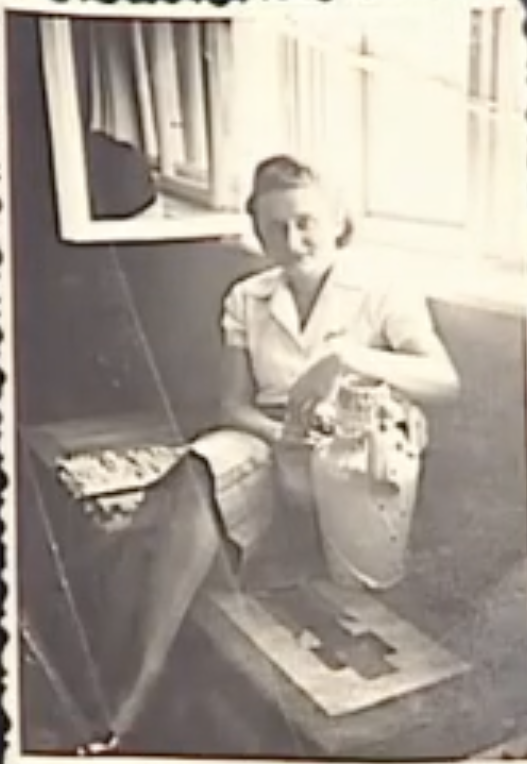
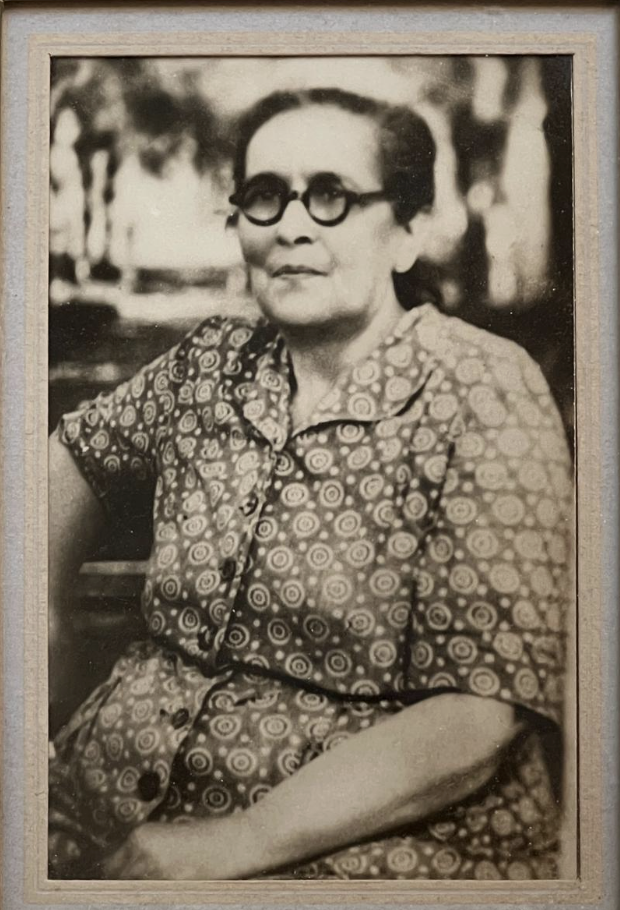
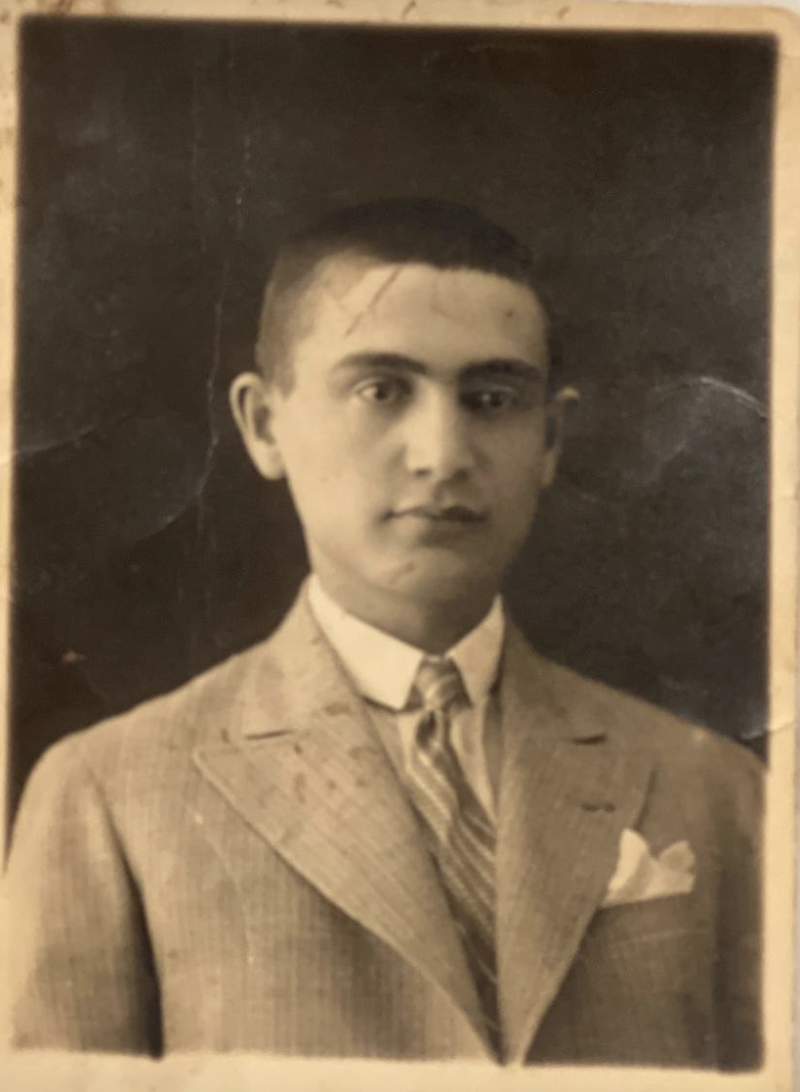
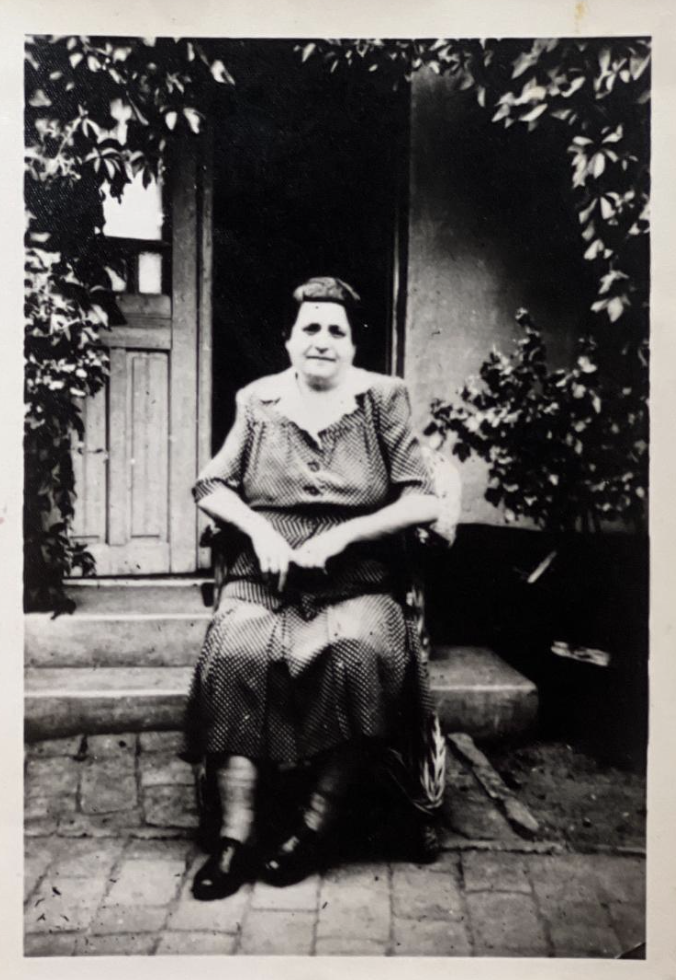
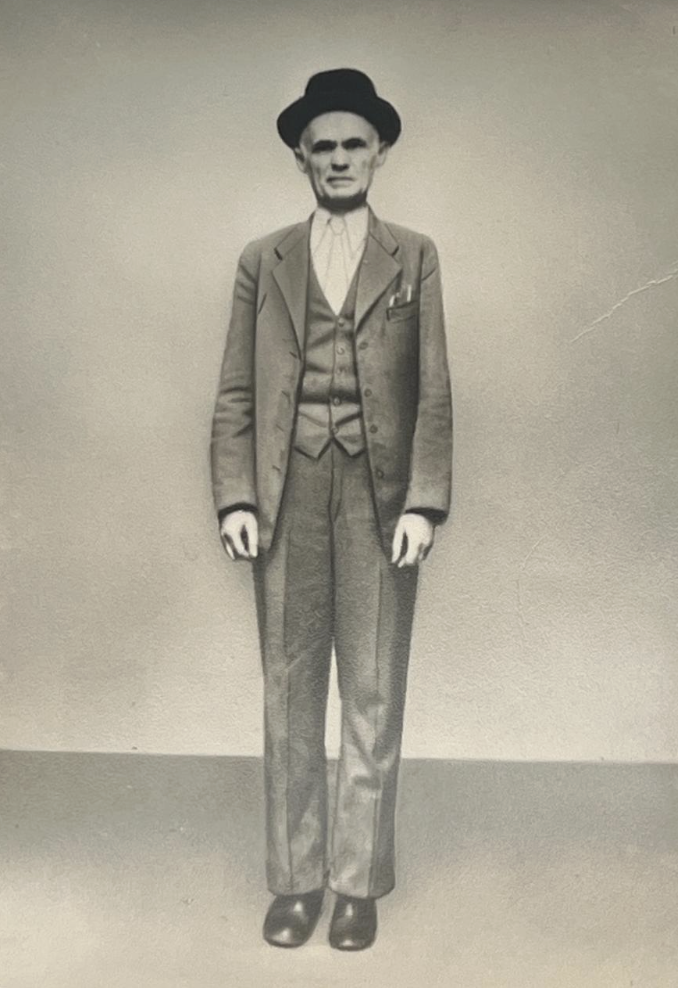
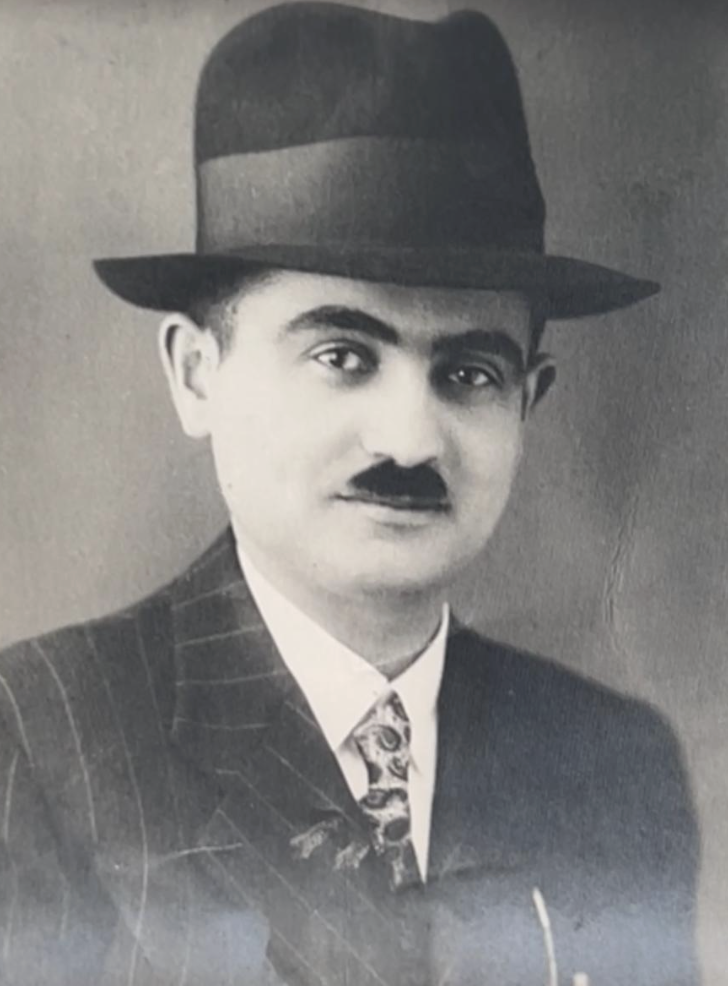
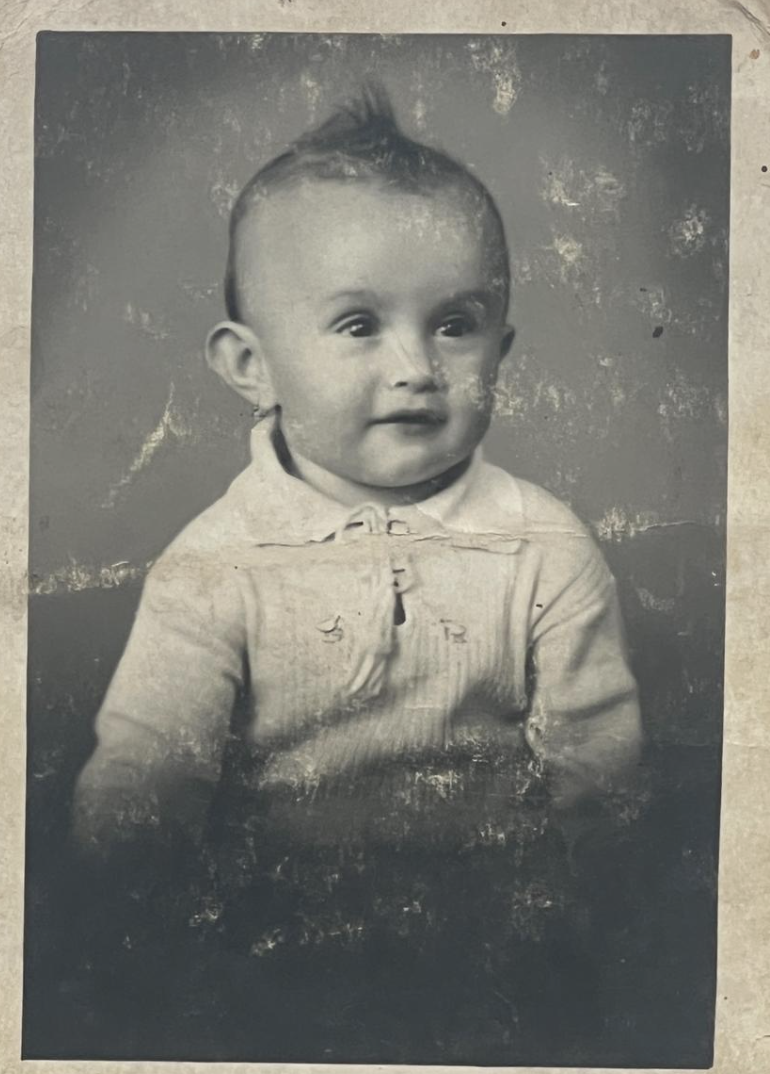
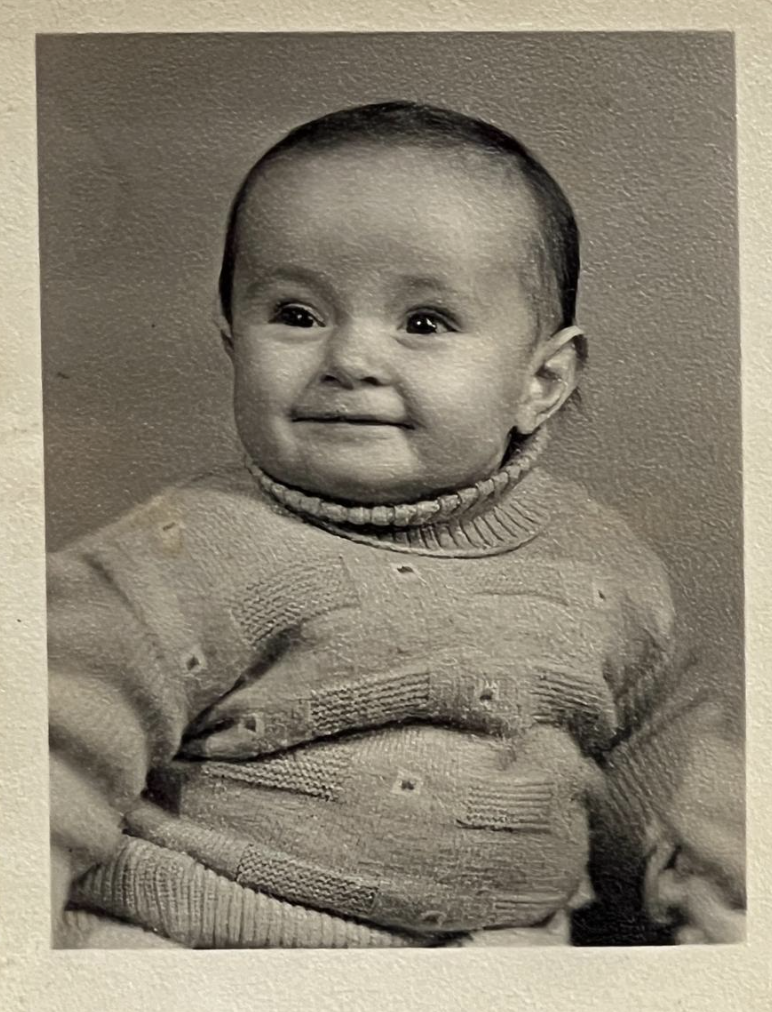
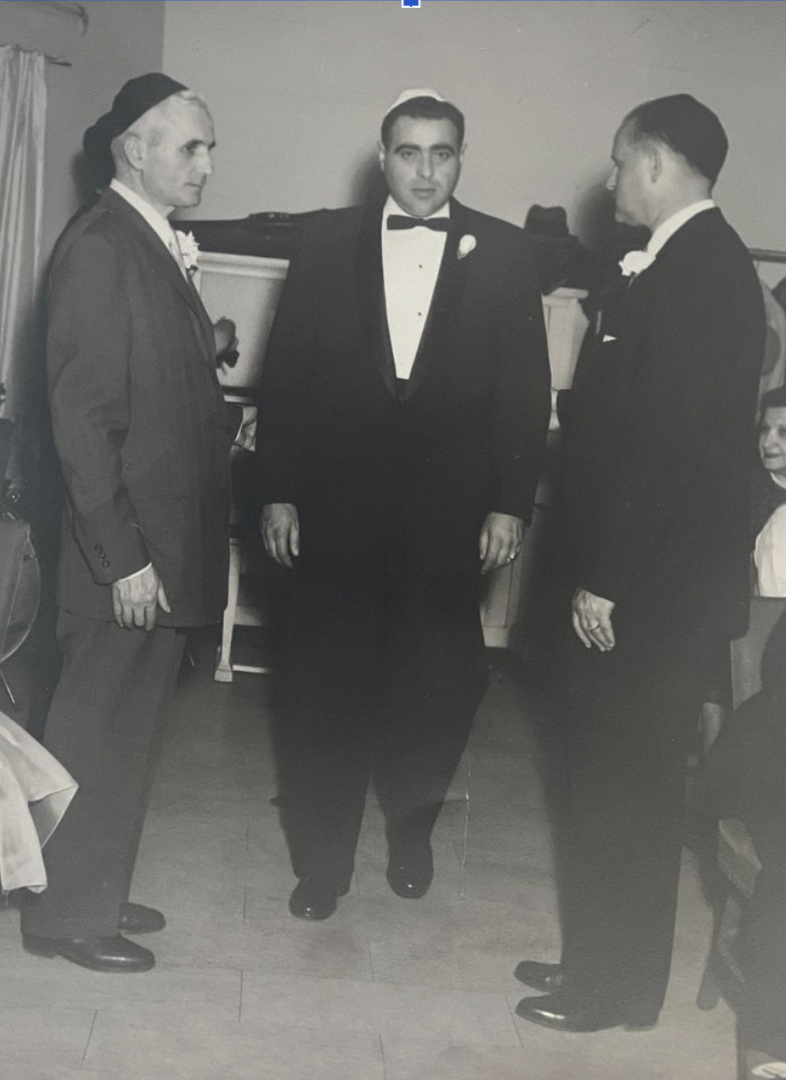
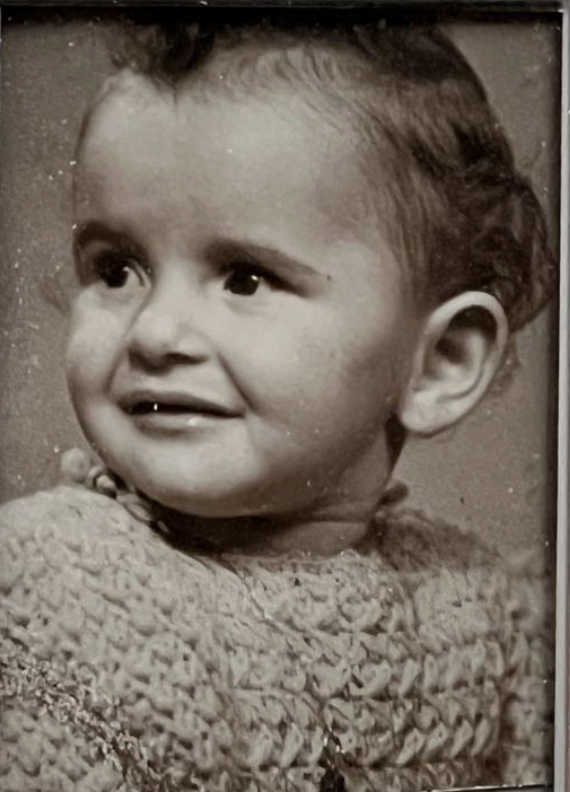
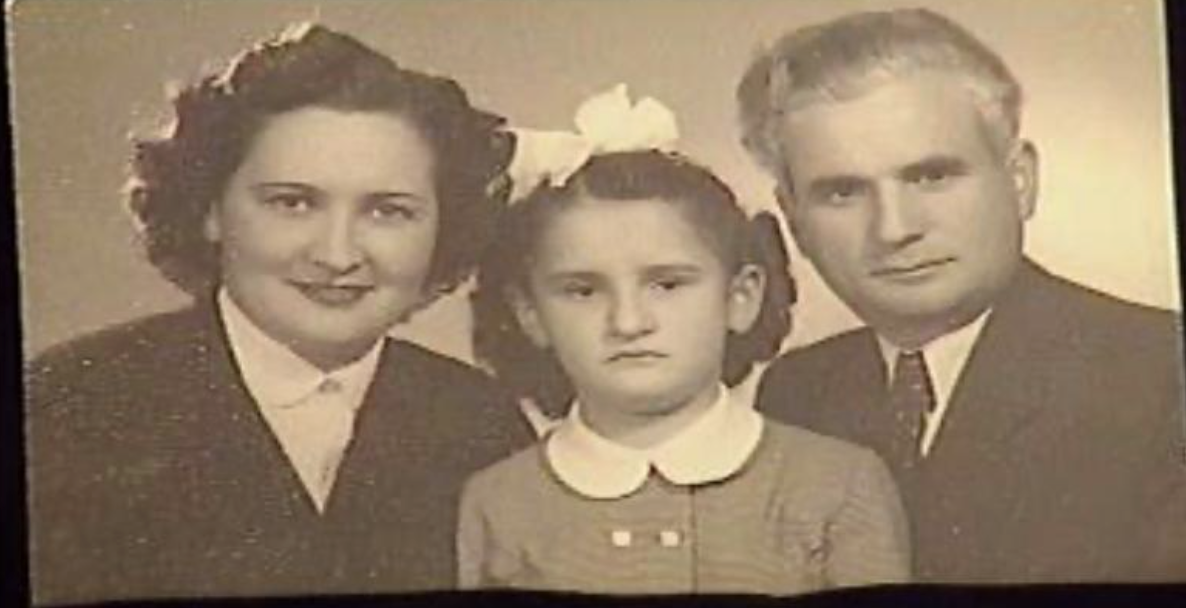
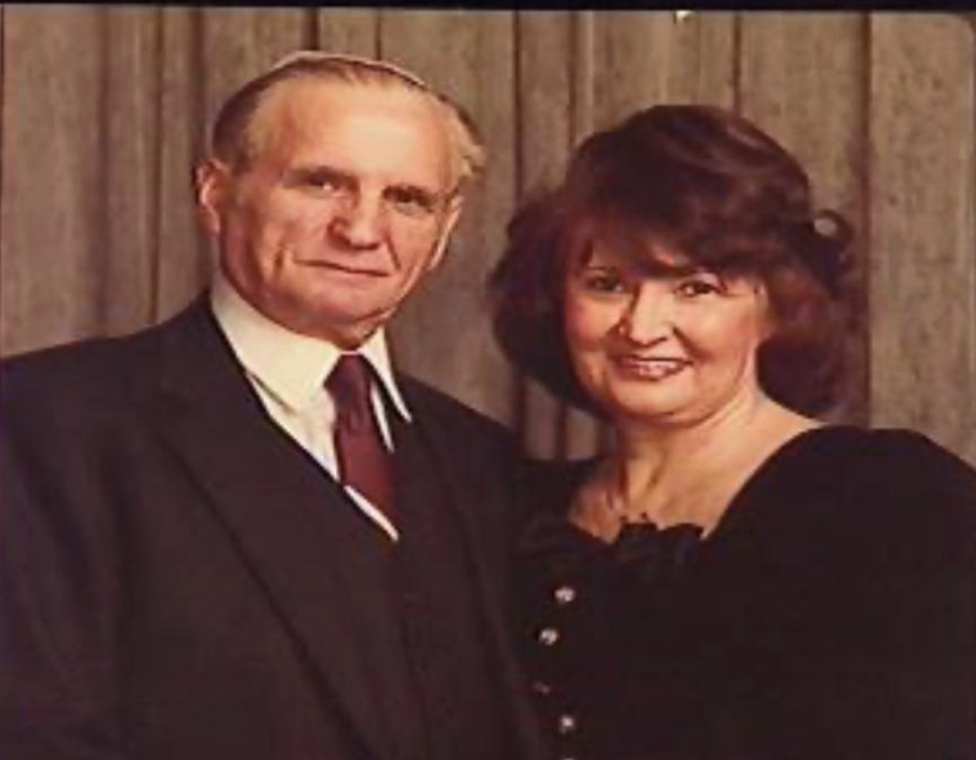
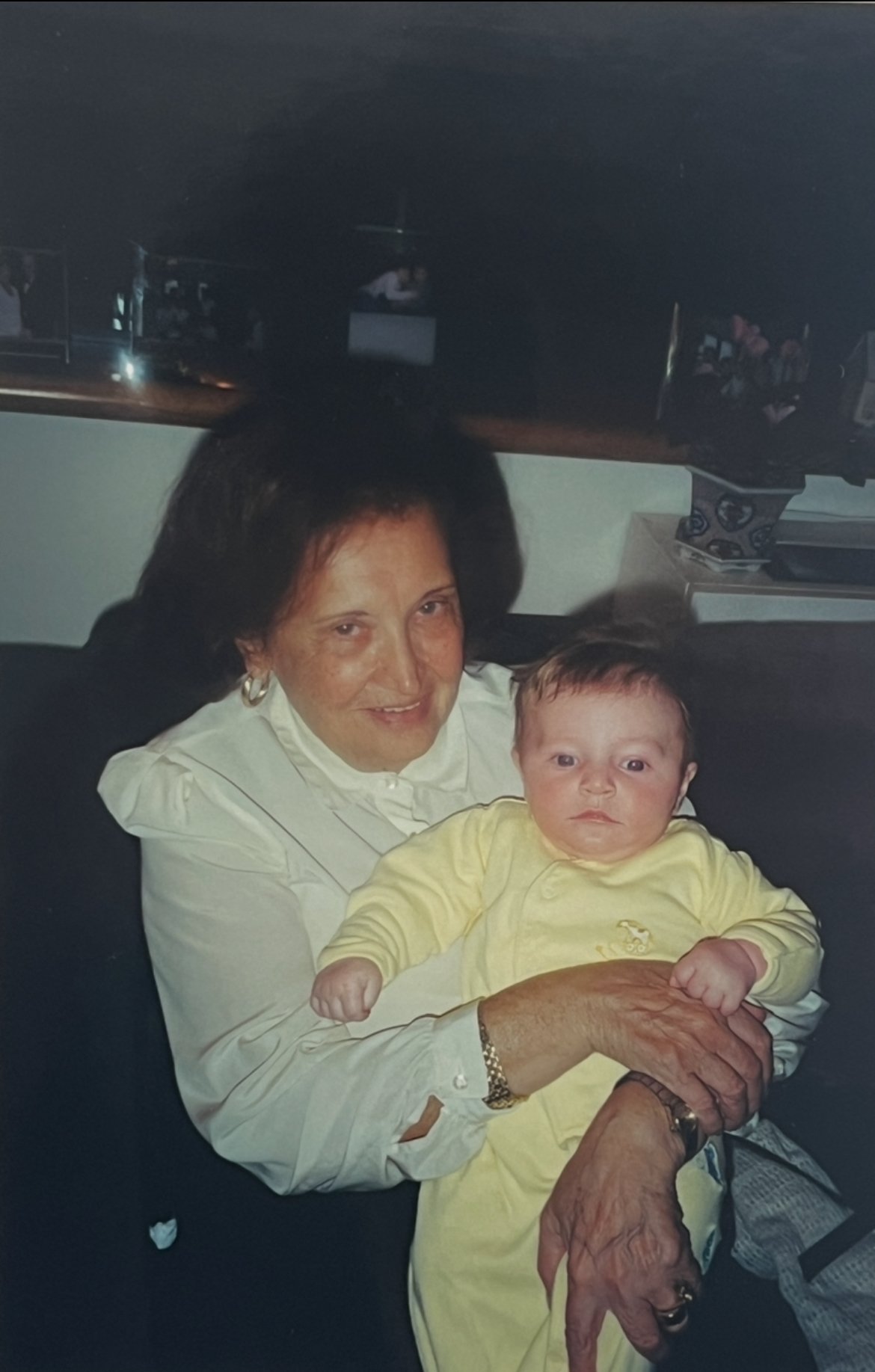
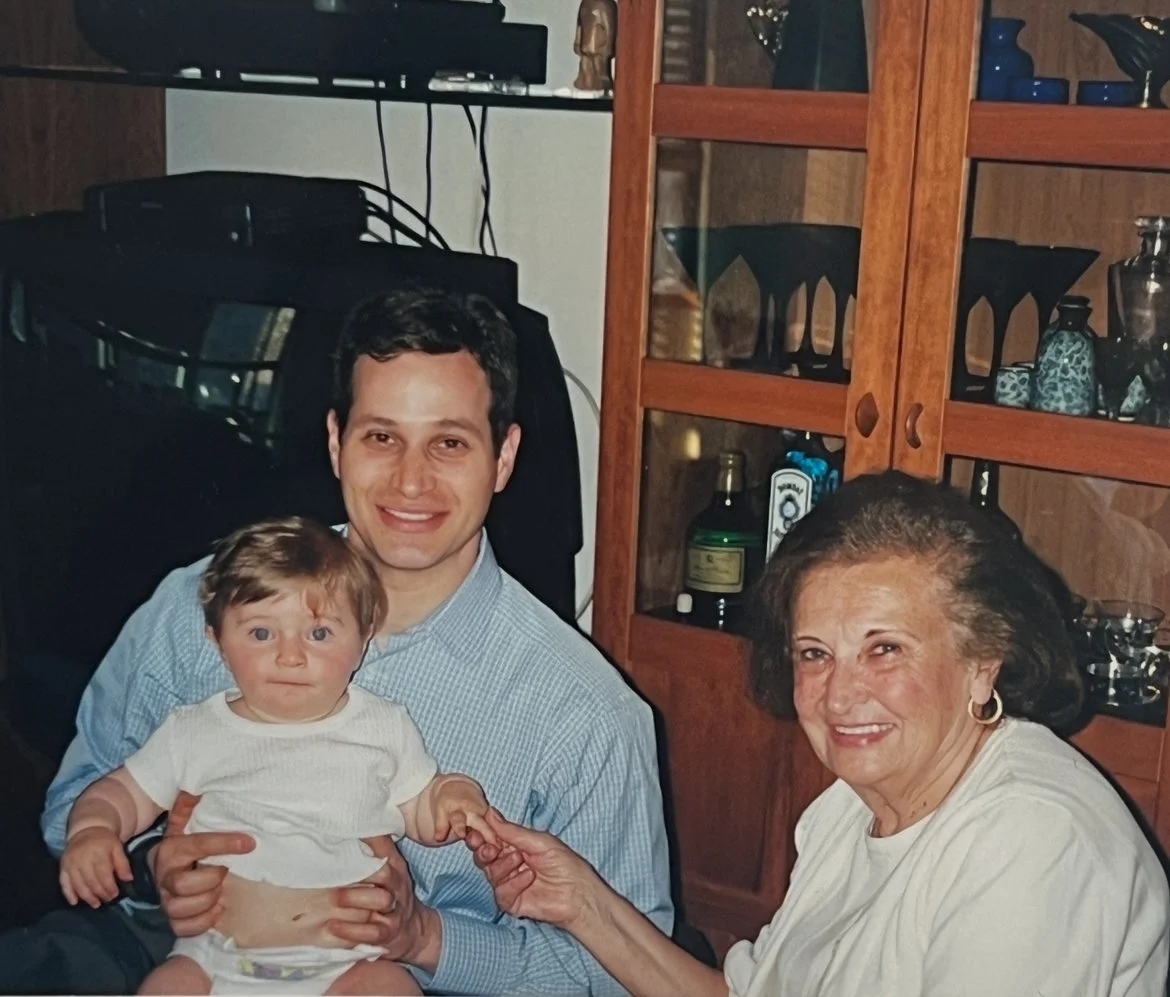
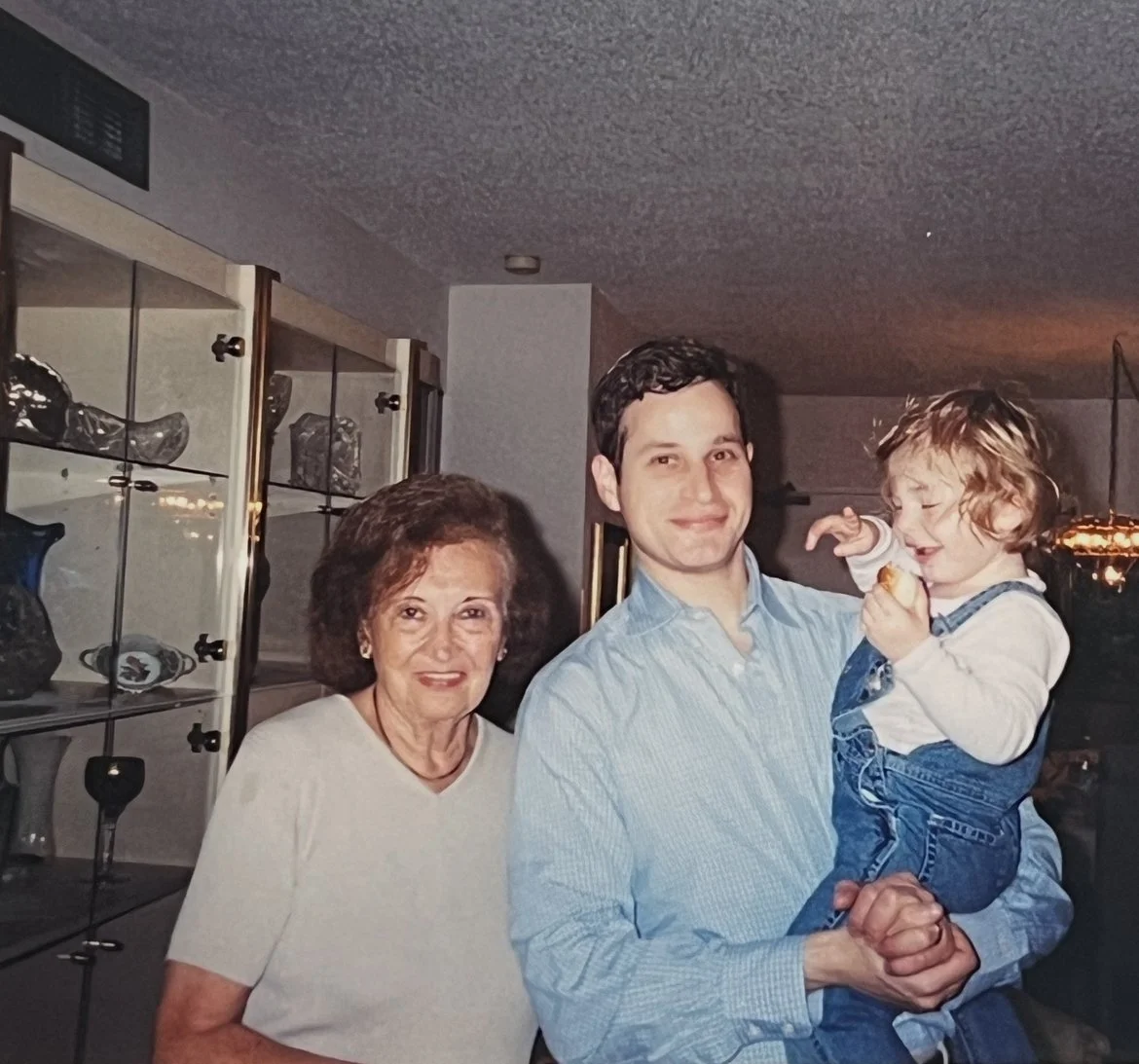
Caroline and Jacob Lefkowitz
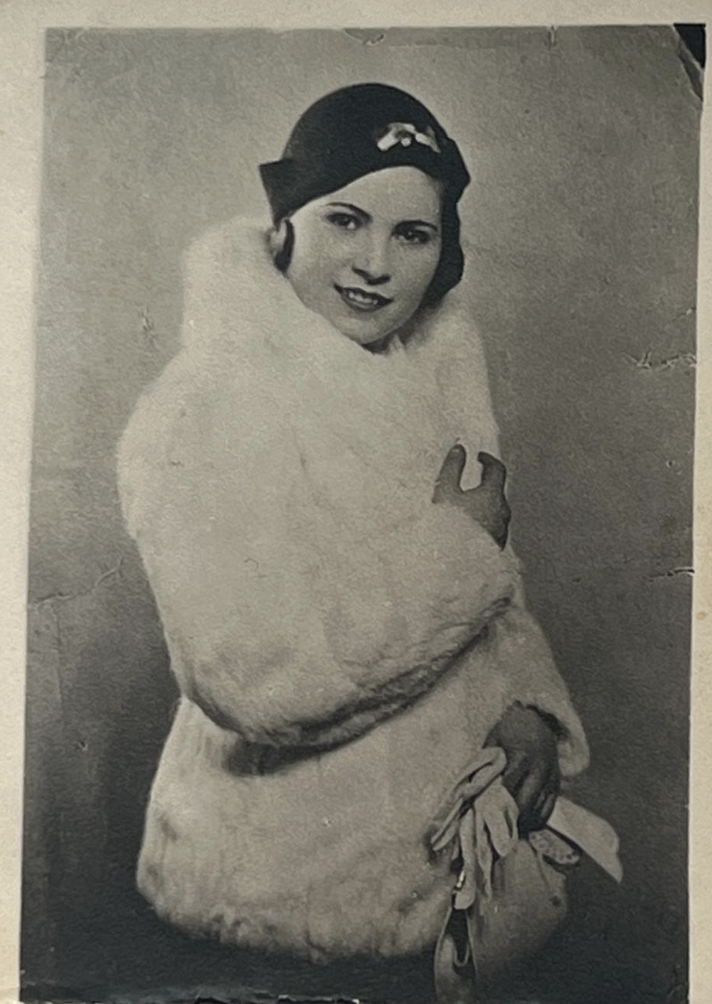
Karolina Lefkowitz (later Caroline; also known as Lili) was born on August 18, 1924, in Tunyog, Hungary, a small village now known as Tunyogmatolcs, to Róza (née Zóber) and Ignácz Nasch. The youngest of five children, she had an older sister, Ilona, and three brothers, József, Miklós, and Sándor (Sanyi). The family was traditionally observant, keeping Shabbat and going to shul, and the children went to Hebrew school in the mornings before attending Hungarian school.
Caroline’s father was a successful landowner, while her mother took care of the home and children. There were very few Jews in Tunyog, and they were more orthodox than the Nasches, who affiliated with the Hungarian Neolog movement, so they moved to Kemecse, before settling in Debrecen, which had a much larger and more vibrant Jewish community. Caroline’s paternal grandparents died before she was born but she was very close with her maternal grandparents, Fani (née Mandel) and Lórincz Zóber.
Life became precarious in 1938, when Hungarian authorities began instituting a series of anti-Jewish laws. Caroline couldn’t continue her education after finishing high school in 1942 because of restrictions on Jews attending university, and young able-bodied men were conscripted into forced labor, among them Caroline’s brother Miklós. Despite these hardships, Hungarian Jews were relatively safe until the German occupation of Hungary on March 19, 1944, at which point the persecution of the Jewish community in Debrecen escalated rapidly.
They were swiftly required to wear yellow stars and had a curfew imposed on them. In May, Caroline, her sister Ilona, and their parents were among more than 9,000 Jews forced into a ghetto in a section of the Jewish Quarter, taking with them only what they could carry. They shared one room in what was known as the “small” ghetto with two aunts, their husbands and children. Miklós was in Russia at the time, and József lived with his wife, Zsu Zsi, and their son, Laci, in Győr, west of Budapest. Sándor died before the Holocaust in an accident. After a couple of weeks, they were transferred to the “large” ghetto, where they stayed until the ghetto was liquidated by Hungarian gendarmes around June 20th.
They slept outside in the cold that night, and the next day, they were forced to march more than 10 miles to the Serly brickyard on the outskirts of Debrecen. It was especially arduous for the young children and elderly people, and officers shouted at and beat them if they couldn’t keep up. Over 13,000 people from the area were crammed together in a factory, which was open on all sides. At this point, they had almost no food or water, and sanitary conditions were horrible.
At the end of June, they were herded onto cattle cars. The wagon that Caroline and her family were on was derailed due to an accidental bombing of the tracks by Allied forces. Although the trip was still torturous, with more than 100 people packed into the compartment, suffocatingly hot and without food, water or toilets for several days, this was a stroke of good fortune, as the trains that left before and after theirs traveled to Auschwitz. Caroline’s transport ultimately ended up in Budapest, where they were ordered to stay in the train but given a bit of fresh air and minimal refreshments. Several people died on the journey; most of them were taken to the Strasshof labor camp in Vienna. Though conditions were harsh there, the rations were slightly better than at other camps and families were not separated.
After a couple of weeks at Strasshof, the prisoners were “disinfected” – showered and given short haircuts. Another week or so passed before they were assigned Saurer Werke, a local factory that manufactured parts for trucks, tanks and airplanes. For 10 months, they labored through the night and were constantly taking cover from bombings during the day. As Russian forces approached and bombardments became more frequent, the prisoners were told that they were free to escape and try their luck. Caroline, her sister and parents, along with an uncle, Eugene (Jenő) Nasch, and two friends, started walking in the direction of Vienna. Others, including one of Caroline’s uncles, Frankel (also known as Yankel) Zóber, decided to stay back, weak and hoping that they would soon be liberated. The family later learned that those who remained at Strasshof were forced by German officers to march to a remote area where they were ordered to dig a ditch and then shot into the mass grave.
When Caroline's group arrived in Vienna around April 10th, 1945, they knocked on doors until one woman let them in and offered them a bit of food. They took shelter there in a bombed-out room for almost a week, until Nazi soldiers came looking for Jews. When they asked for identification, Caroline and those with her ran away, as bullets flew over their heads. The Russians were so close at this point that even the Germans couldn’t freely roam the streets, and so they managed to escape. Once again, they knocked on front doors of the city’s wrecked buildings, until someone let them into a basement where Jews who had fled from various places were sheltering.
After a night of relentless fighting outside, they woke to an eerie quiet. Someone went out of the house and saw a Russian soldier, and they realized they were finally free. They stayed there for another couple of days, and their Russian liberators gave them some food, but then they decided to head back to Hungary. It was a difficult journey lasting almost a week before they reached the city of Győr, where Caroline’s family learned that her brother József had perished in Mauthausen, and that his wife and their son were murdered upon arrival at Auschwitz.
The family took a train to Debrecen, arriving after a few days, and discovered that their large house had been demolished in a bombing. They moved into a small apartment, and Caroline learned to sew so that she could earn money to help support her family. Her father got sick during the war and died a few months after they returned home, while her mother had gotten frailer from their wartime deprivation.
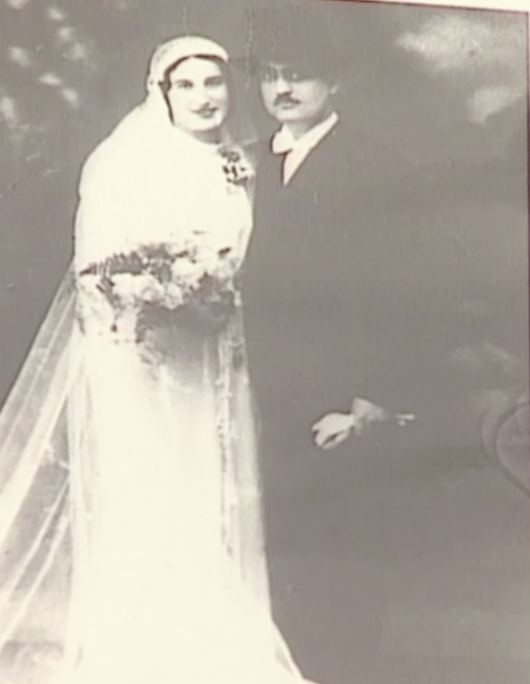
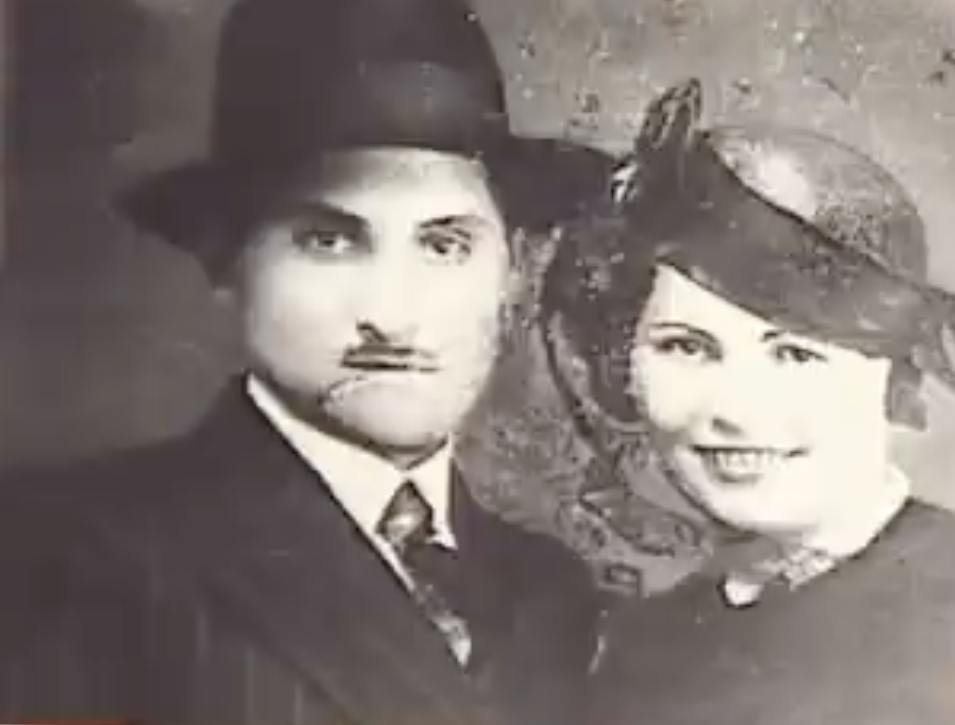
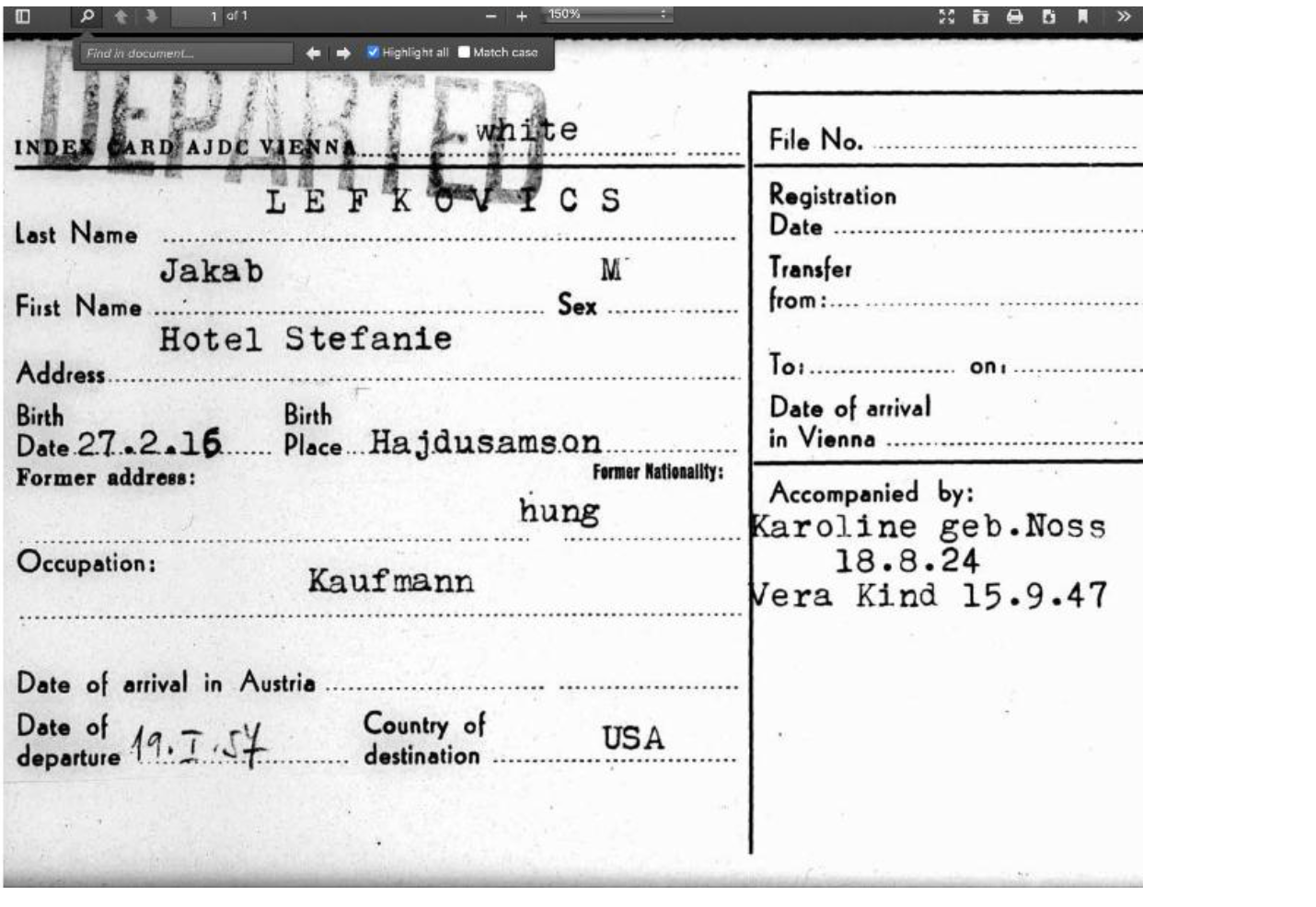
In the summer of 1946, Caroline met her husband, Jenő Lefkowitz (later Jacob; also known as Jack) at a recreational facility in Debrecen where she and her friends went swimming. They were engaged in July, and married in December, before moving to Hajdusámson, Hungary, where Jacob was born on February 27, 1916, to Szeréna (née) Schwarcz and Béla Lefkowitz.
Jacob had an older brother, Zoltán (known as Zolie), an older sister, Irén, and five younger siblings: Endre (later Andrés), Nándor, Miksa, Ella and Ernő (later Ernesto). Ella died of typhus when she was eight years old. Besides Jack, only three of the remaining family members survived the Holocaust: Nándor, Endre, and Ernő.
The Lefkowitz family was very religious, attending synagogue and observing Shabbat and holidays, in addition to studying Jewish texts. Jack’s father, a successful businessman, was also president of their synagogue. He first opened a little grocery, then became a grain merchant, and eventually owned a flour mill, as well as bars and restaurants. His mother took care of the family and home, and was known for preparing feasts for every special occasion.
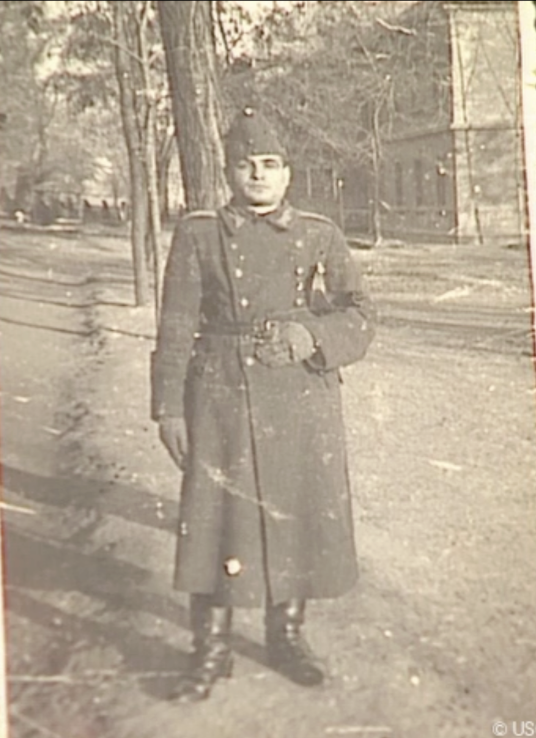
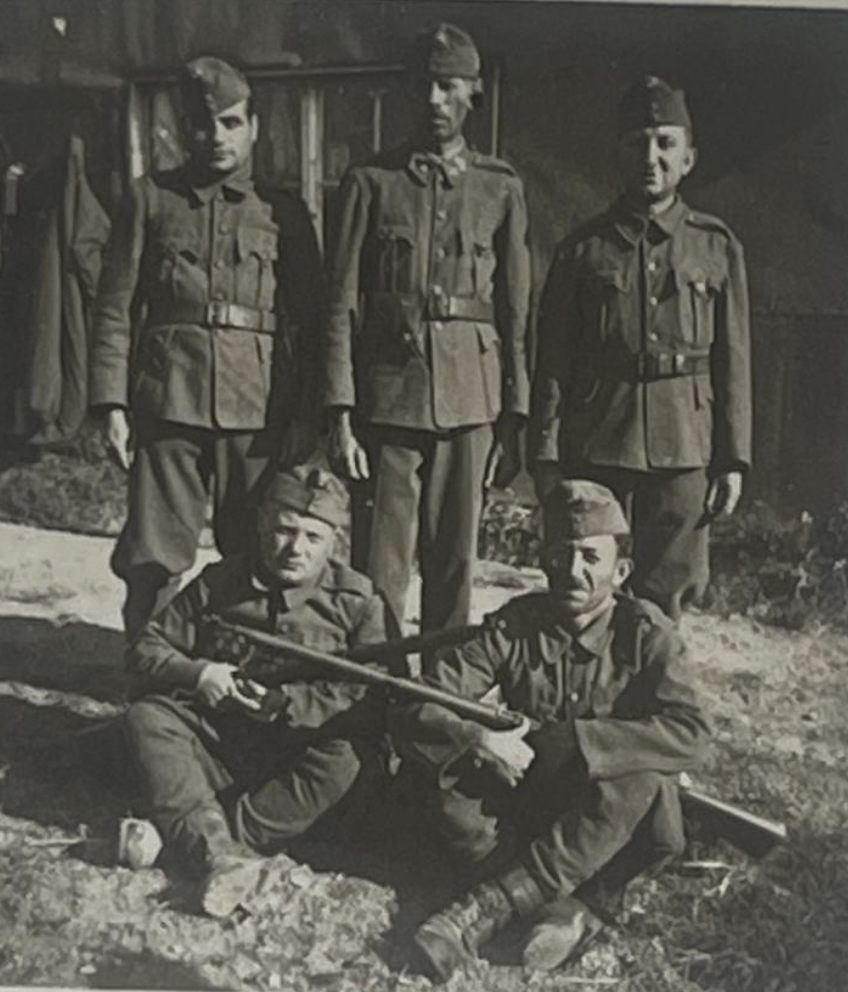
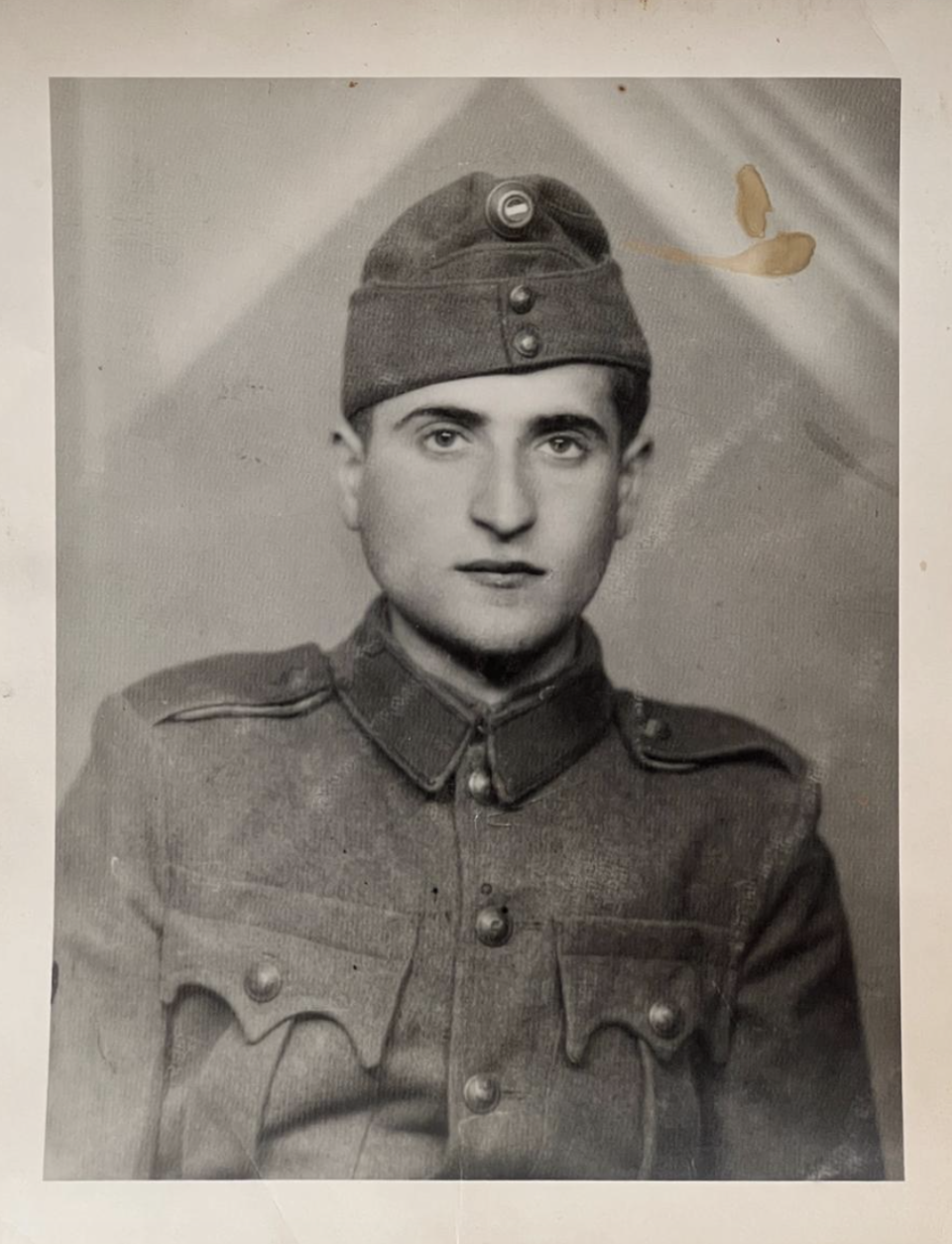
Given the proximity of their town to Debrecen, the Lefkowitz family experienced the same discrimination and persecution as the Nasches beginning in 1938. As a young, able-bodied man, Jacob was conscripted for forced labor in 1941. He initially remained in Debrecen, where he loaded military supplies onto freight trains for about a month. However, In May 1942, he and Nándor were called back and subjected to hard labor for nine months, before being sent to Russia.
The Jewish conscripts were treated horribly, beaten and sometimes even killed if they weren’t working fast enough or stepped out of line. They slept on the ground and many died from the harsh conditions, disease and starvation. When Jacob and Nándor arrived in Russia, the military front had just been broken so, rather than sending them to fight, Hungarian officials “lent” their group of Jewish prisoners to German officers to perform slave labor. For three months, they dug for a coal substitute, walking six miles each way to and from work every day, subsisting on frozen potatoes. Back with the Hungarian army from January 1943 through the end of March 1944, Jacob’s company performed all sorts of forced labor, from cutting wood to building highways.
Around this time, back in Debrecen, the Nazis had invaded and swiftly instituted anti-Jewish laws. Within just three months, they established a ghetto and deported its inhabitants. Jenő’s parents and his sister Irén, along with her husband, Miksa Gluck, and their two children (names unknown), perished after being sent to Auschwitz, while his brothers Zoltán and Miksa are believed to have died in Russian prison camps. Zoltán’s wife, Ilona Friedmann, and their little daughter, Ágnes, were deported and murdered in July 1944.
Meanwhile, with Allied forces advancing on the Eastern Front, Jacob and Nándor were among a few dozen prisoners who decided to flee. When they encountered Russian soldiers, their association with Hungary rendered them prisoners of war, despite having been Jewish prisoners. They were detained with around 1000 people but managed to escape and made their way to Czernowitz (today Chernivtsi), where they worked at a large hospital. In the fall of 1944, Nándor volunteered to fight for the Hungarian army in Budapest and escaped during the siege of the city, which lasted from the end of December until mid-February 1945.
In Budapest, Nándor was reunited with Endre and Ernő, and the three brothers subsequently ran away together and hid out the rest of the war in the home of a Christian family. Jacob was eventually dismissed from his slave labor battalion in Russia but, when he went to the train station to return home, he was taken for a defecting Russian soldier and detained for 25 days. He was finally able to make his way back to his town a month or two after the war ended on May 8, 1945.
Jacob returned to working at his family’s flour factory, and he and Caroline had a daughter, Vera, in September 1947. However, in 1949, as they were rebuilding their lives, the Hungarian People’s Republic was established, and the new Communist government confiscated the flour mill. They decided to move to Budapest, where they rented an apartment for a short time but soon made plans to leave Hungary altogether. Jacob’s brother Endre, who had made his way to Vienna earlier that year, hired someone to bring them to join him by boat.
Their other surviving brothers, Nándor and Ernő, had also gone to Vienna in 1949 but then emigrated to the new State of Israel and Venezuela, respectively. Endre was also set to emigrate to Venezuela but was still in Vienna because his wife had just given birth. Although Jacob’s siblings escaped Hungary without incident, the person hired to bring out him, Caroline and Vera turned out to be a provocateur, a Communist-era agent of the secret police, who were waiting for them before they crossed the border. The Hungarian authorities confiscated their belongings and imprisoned Jacob for six months.
When he was released, Jacob worked menial and office jobs for seven years to avoid the Communists’ attention, while Caroline got a job as an administrator in the office of a coal business. The 1956 Hungarian Revolution offered another chance to escape. That November, Caroline and Jacob fled with Vera, then nine years old, to Vienna, and made there way from there to Bremerhaven, Germany, where they set sail for the United States aboard the USNS General Leroy Eltinge on January 19, 1957.
They docked in Brooklyn, New York, on February 8, 1957 and were put up by the Hebrew Immigrant Aid Society at the Hotel Breslin (now Ace Hotel) in Manhattan for a few days before renting a room in the Boro Park neighborhood of Brooklyn. Vera had gotten sick with rheumatic fever on their journey and, soon after their arrival, was admitted to Maimonides Hospital (now Maimonides Medical Center). After 10 weeks, she recovered, and before long, the family settled into their new life in America. Although the original plan had been to join Jacob’s brothers in Venezuela, they were encouraged to go to the United States if they had the opportunity.
Jacob worked in a lumber yard for a few weeks but then decided to start his own business selling zippers and trimmings to retail stores. He bought a suit and briefcase, and managed to secure some merchandise, then walked around selling it. He soon got a driver’s license and car, realizing he could make more money by driving to Coney Island, Queens and other parts of the city to sell his wares. The family rented an apartment in Boro Park, in a community with many Holocaust survivors from Hungary and Eastern Europe, where they lived until 1969.
Caroline didn’t have the chance to say goodbye to her mother, Róza, before she fled Hungary and was not allowed to return until the 1960s, by which point her mother had already passed away in Debrecen. Her brother, Miklós, had survived forced labor in Russia but was emaciated and near-death when he was liberated, though he eventually made it home and recuperated. He joined the Communist party and served in a prominent position, overseeing imports and exports such as lumber and gas. Caroline’s sister, Ilona, also remained in Hungary, and both of her siblings married and had families there.
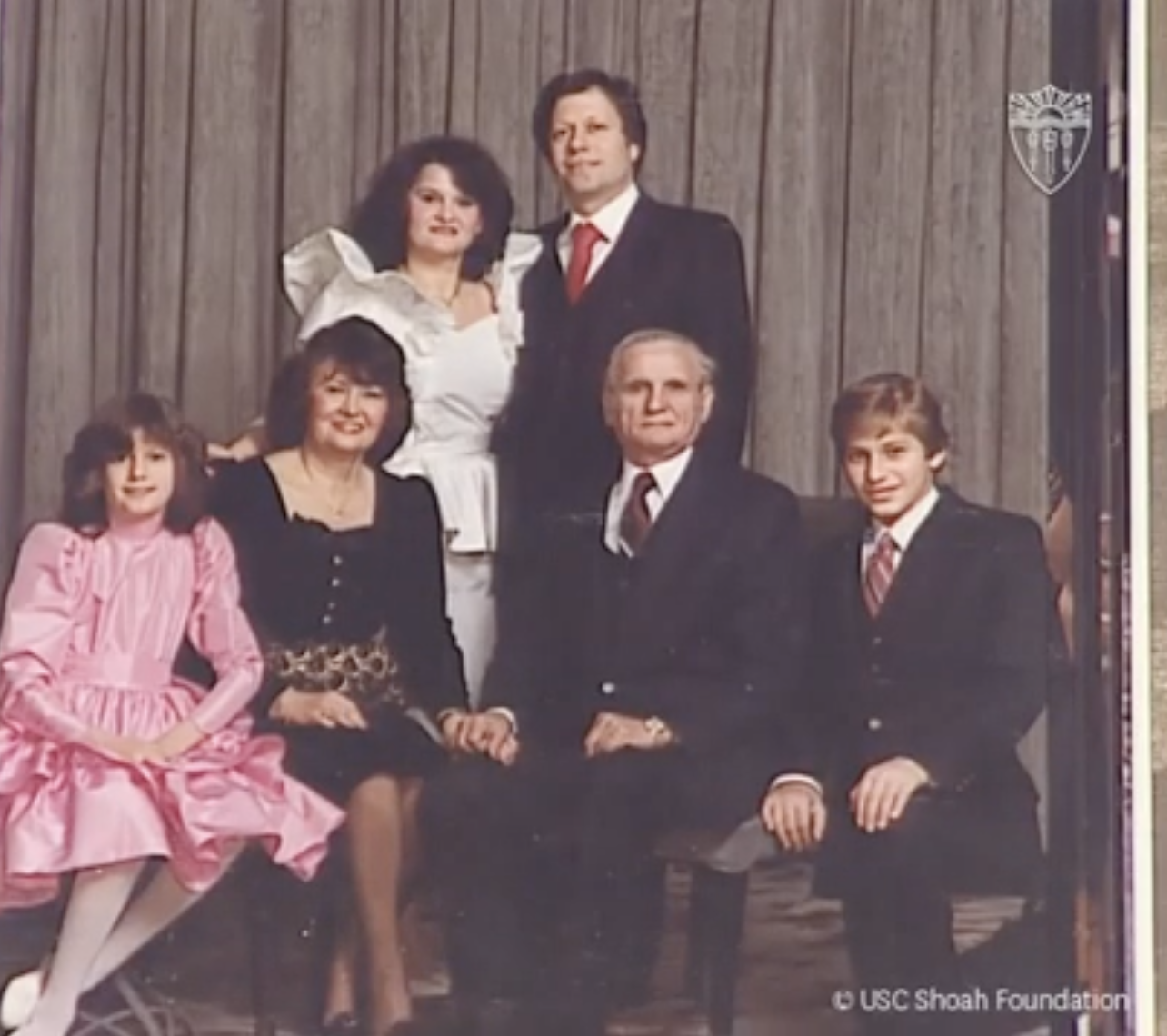
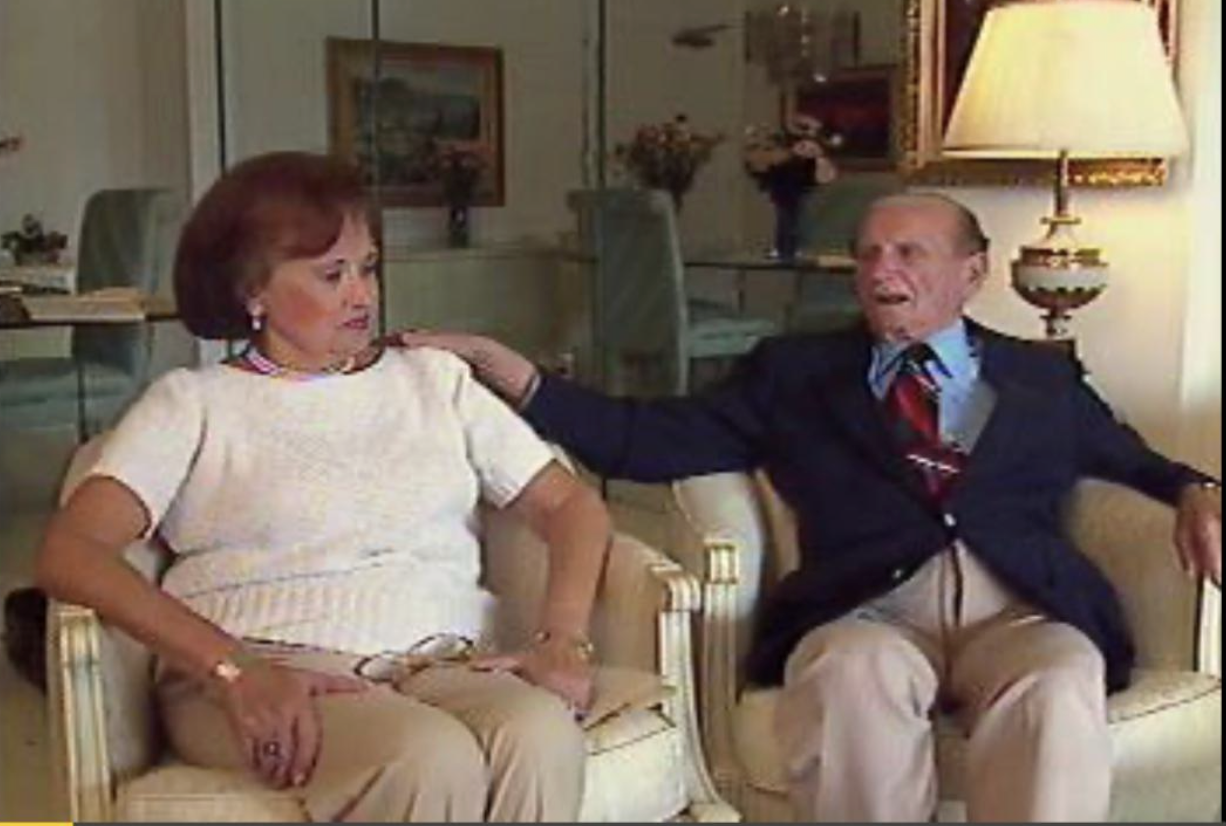
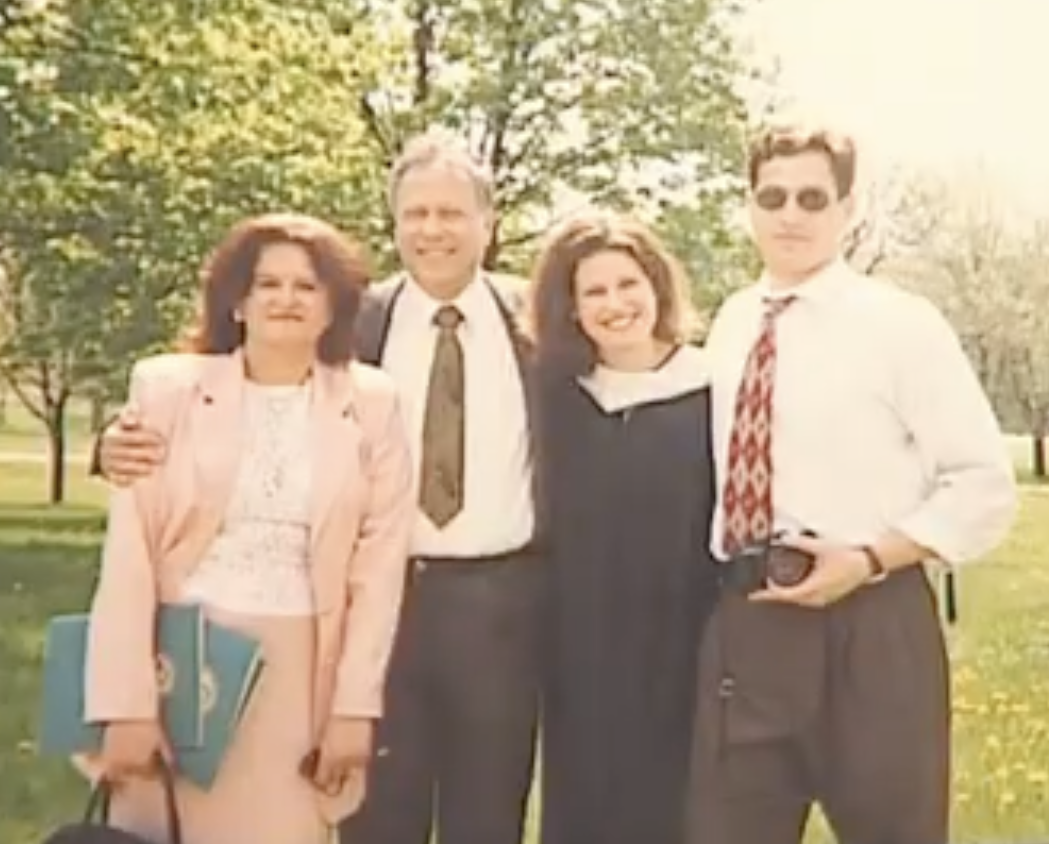
Caroline and Jack remained very proud of their Hungarian heritage but cherished the religious freedom and economic opportunities that America offered. Later in life, they moved to Hallendale, Florida, where they also lived in a community with many Holocaust survivors. Their daughter, Vera, had two children, a daughter, Suzanne, and a son Robert, the father, with Rachel Stone, of Heschel students Zoe (MS ‘15), Jack (MS ‘18) and Eli (HS ‘ 28) Bernstein.
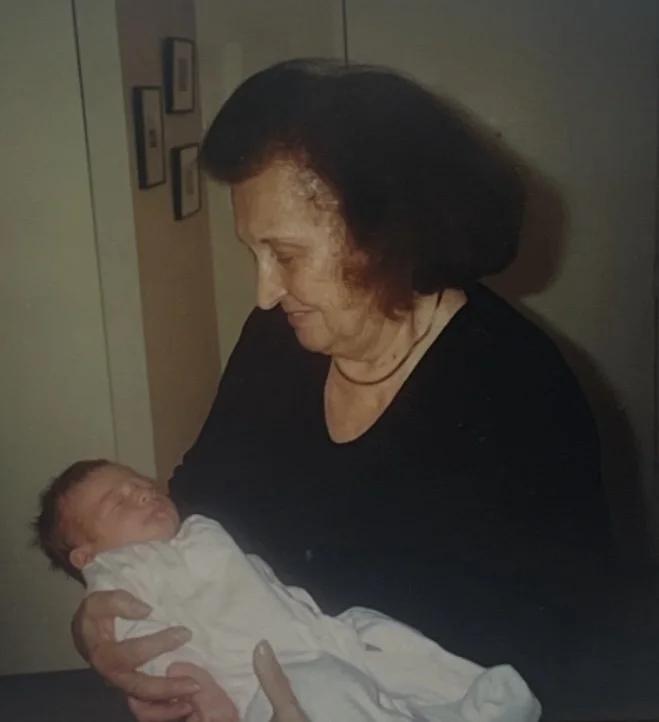
Jacob passed away on September 6, 2000, just before his first great-grandchild was born, but Caroline, who passed away on August 31, 2008, lived to meet four of her six great-grandchildren. All of their children, grandchildren and great-grandchildren refer to them as Anyu and Apu, which mean mom and dad in Hungarian, as they carry on their legacy and continue to share their stories of survival.