George Lindenblatt
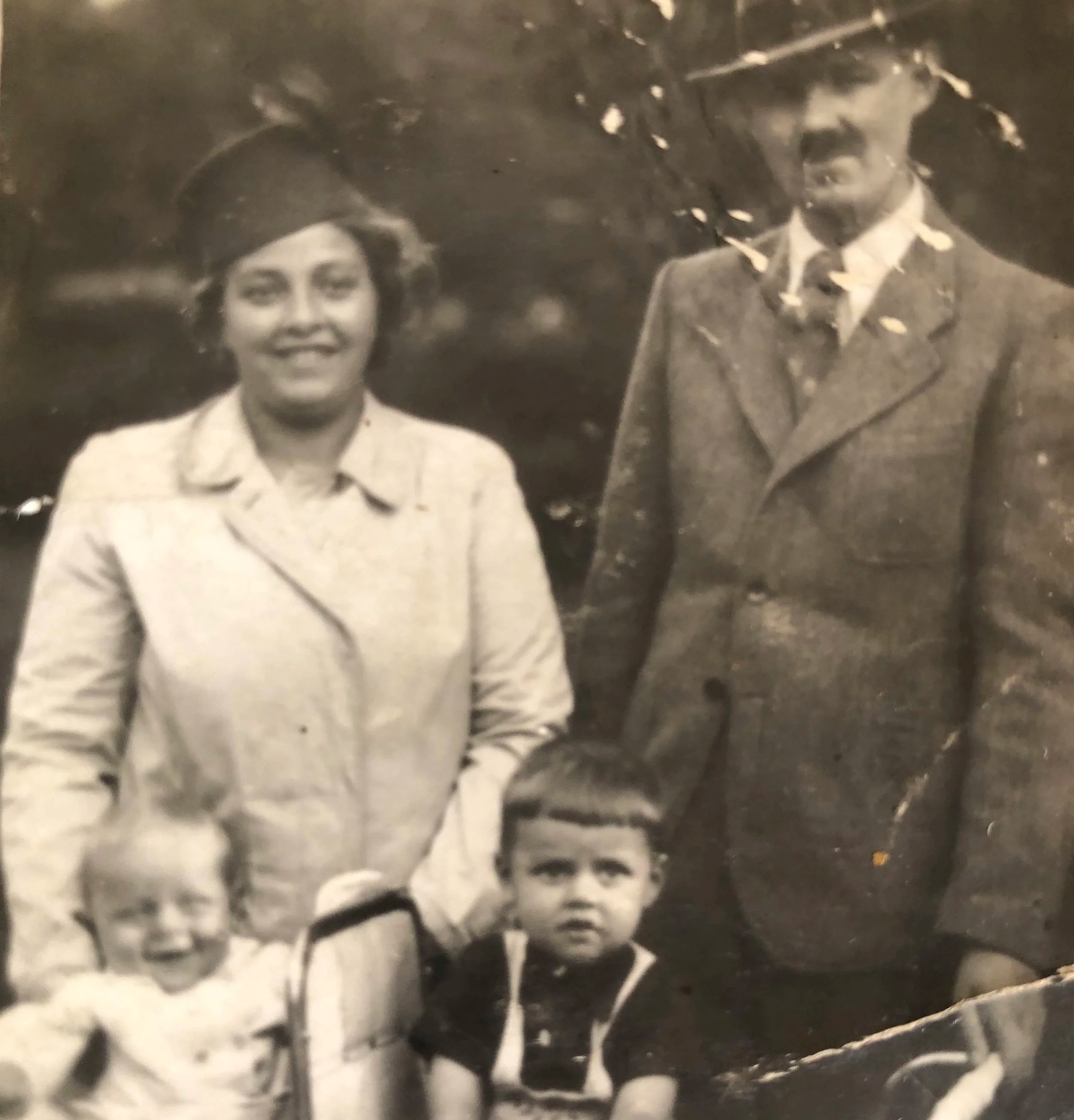
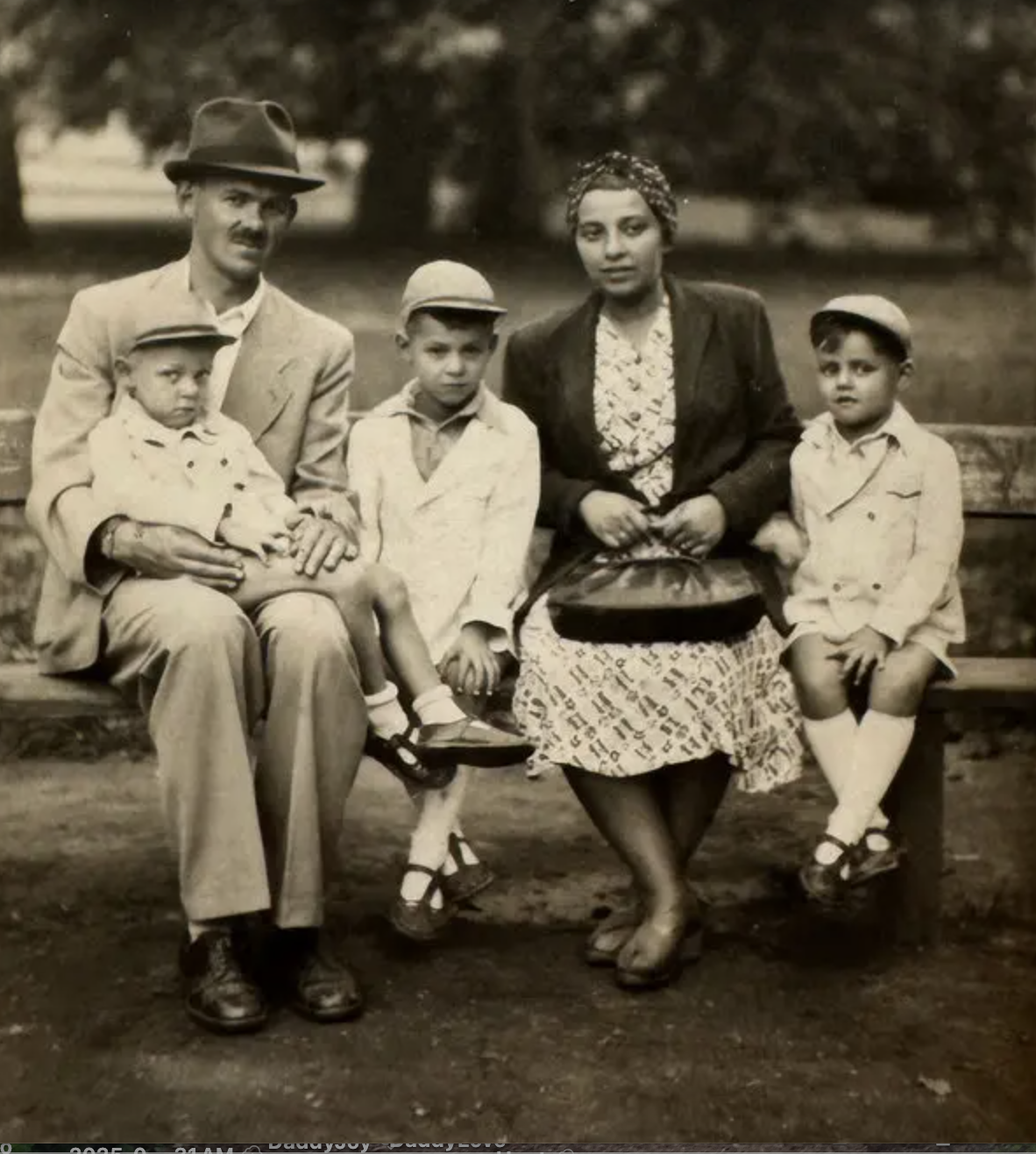
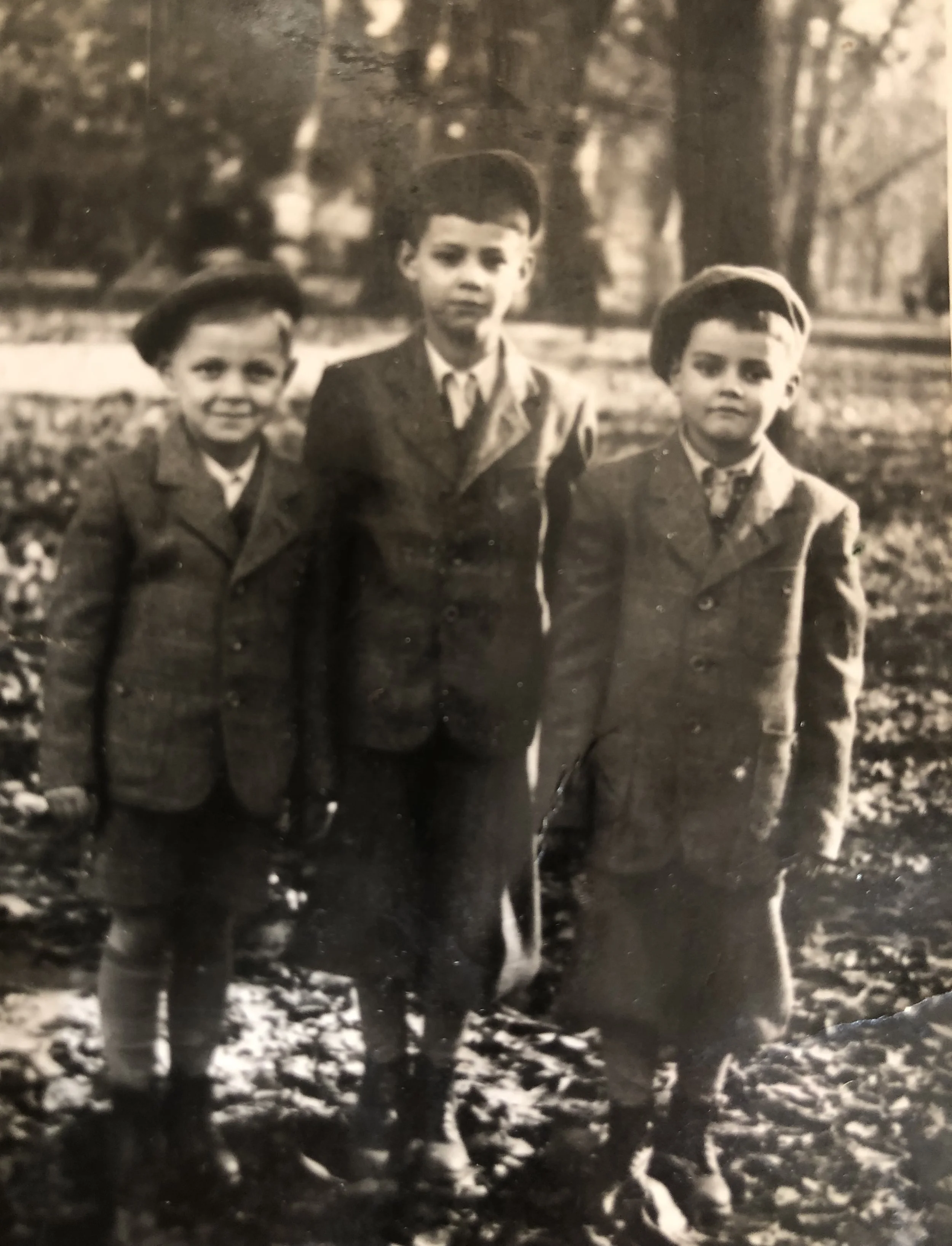
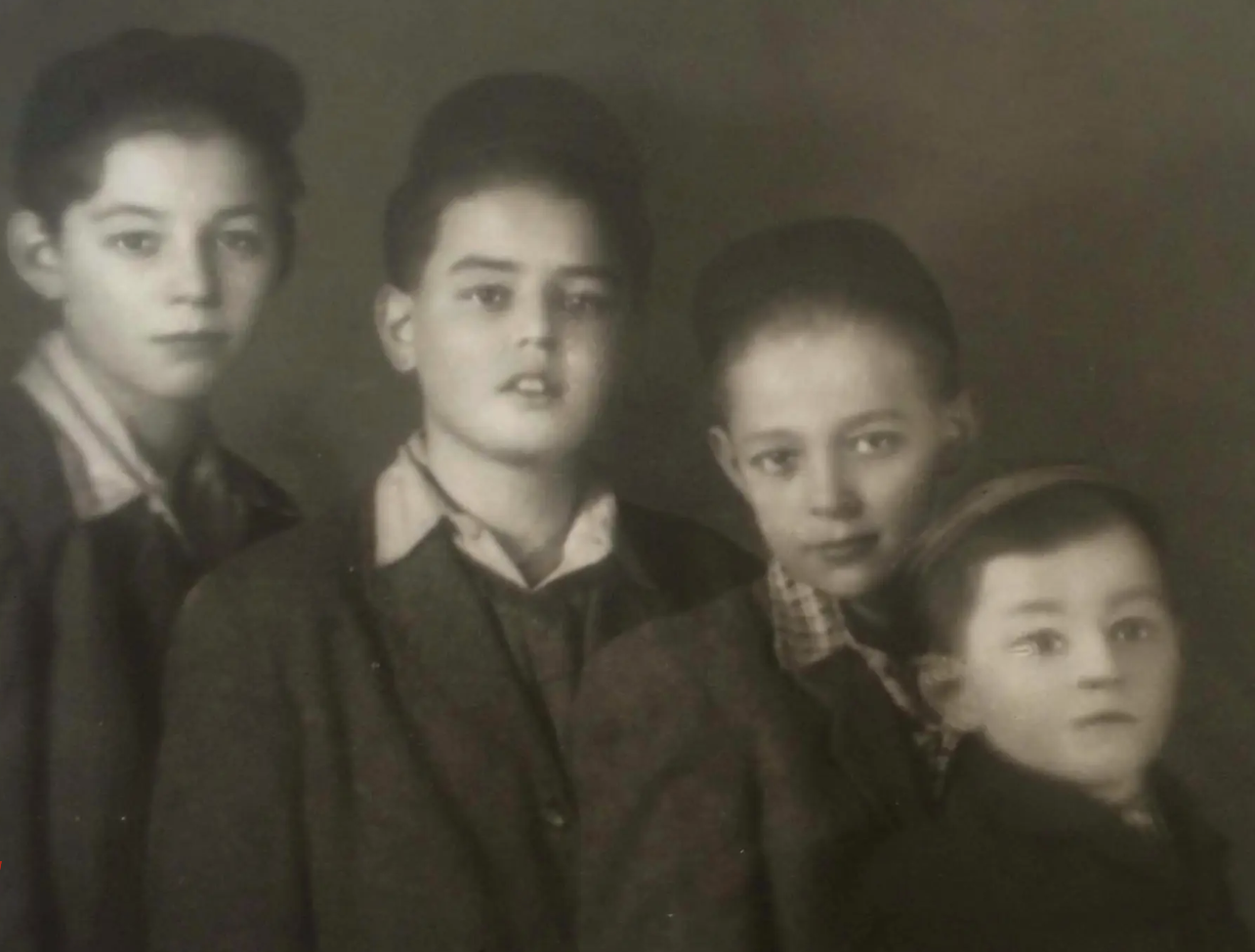
George Lindenblatt was born in Budapest, Hungary, on August 10, 1938, to Piroska (Platschek) and Jeno Lindenblatt. Along with an older brother, Jehuda, and a younger brother, Robert, he was raised in an Orthodox home, observing kashrut, Shabbat and Jewish holidays. A large extended family of grandparents, aunts, uncles and cousins lived nearby. Before World War I, Jeno ran a dairy business and Piroska was a homemaker.
After Hungary signed a pact with Nazi Germany in November 1940, anti-Jewish legislation was introduced and antisemitism became more rampant. Even so, Budapest’s Jews remained relatively safe until Germany occupied Hungary in March 1944 and the persecution of the Jewish population escalated. That June, Jews in Budapest, numbering around 200,000, were concentrated into buildings marked with Stars of David, and deportations began.
International pressure and local humanitarian efforts slowed the pace of the Final Solution in Hungary’s capital, but in October 1944, when the fascist Arrow Cross party seized power, the situation became much more precarious. Many men were conscripted into forced labor, among them Jeno Lindenblatt, while others, such as Piroska’s siblings Reuven and Magda, were deported to concentration camps. (Magda survived Theresienstadt but Reuven, who was deported to Auschwitz perished.) In November 1944, more than 70,000 people were taken on a death march, and at the end of 1944 and beginning of 1945, an estimated 20,000 were executed along the banks of the Danube. Piroska’s father, Zsigmond Platschek, a rabbi who disguised himself as a non-Jewish Hungarian and created false papers for fellow Jews, was ultimately captured and among those massacred by the river.
George, his mother, and siblings were among the roughly 100,000 Jews who survived the war in Budapest through their own daring, luck and help from righteous gentiles. When Piroska was ordered to report to the train station, she defied the decree, refusing to leave her sons. Jeno managed to escape the labor camp where he was interned long enough to help his wife and children go into hiding. They initially found refuge in the Glass House, where Swiss consul Carl Lutz rescued several thousand Jews, and subsequently moved from place to place, sheltering in a series of safe spaces, at times sleeping in bunkers and living outdoors, passing as non-Jewish because of their fair features.
Following a 50-day battle that became known as the Siege of Budapest, the city was liberated by Soviet forces on February 13, 1945. After liberation, Jeno returned from the labor camp. He and Piroska moved the family to a new home near their former apartment in the city, and had a fourth son, Paul, in 1946. Jeno rebuilt his dairy business and ran it, with George helping to deliver orders by bicycle, until it was nationalized by the Communist government in 1949. As a teenager, George competed throughout the Iron Curtain on Hungary’s National Junior Water Polo Team. In 1956, when the Hungarian Revolution was crushed by Russian tanks, George, Jehuda and Robert were among those who managed to flee the country. Their parents and youngest brother would soon follow. (This New York Times magazine article by Heschel parent Taffy-Brodesser Akner explored the challenges of Holocaust remembrance through the prism of Jehuda’s story.)
George first traveled through several European countries, with support from refugee organizations like the Hebrew Immigrant Aid Society (HIAS). He ended up moving to London, England, where he worked as a dishwasher and passport handler at Paddington Station. During his time there, he also learned English and played water polo for the Penguin Swim Club. George moved to the United States in 1959, reuniting with his family, which had made their way to New York. He initially lived in Williamsburg, Brooklyn, and his first job was working as a busboy at the Copacabana, where he ran into celebrities like Connie Francis and Frank Sinatra.
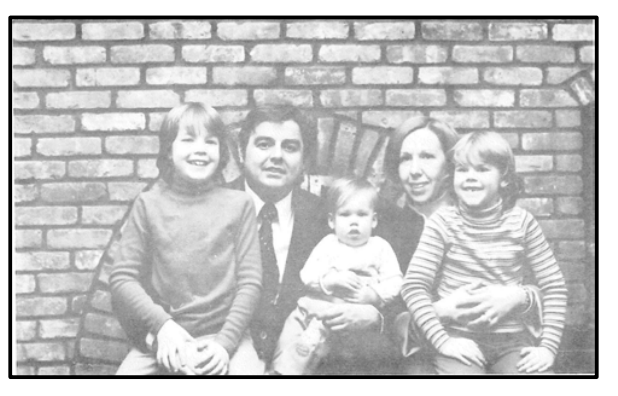
In 1962, he enrolled in cantorial school at Hebrew Union College, and he met his wife, Elaine Freed, at the Monroe Temple of Liberal Judaism in Monroe, New York. Her parents, who were both born in America, owned the Red Apple Rest in Tuxedo, the once-famous midway point for travelers heading upstate from New York City. They married in 1967 and had three daughters, Eve, Suzanne and Nicole.
In 1971, George became the cantor of Astoria Center Israel, where he remained for 50 years before retiring, while simultaneously working at Cambridge Camera, a family business opened by his brother, Robert, in 1963. He has since held the title of Cantor Emeritus at the synagogue, which honored him in 2021 for his half century of service. George played water polo in Israel as a member of the US Maccabiah team in 1961 and 1977, and led services for the American delegation there. George and Elaine have five grandchildren, including Heschel students Noa (2020), Ella (2022) and Ben (2027) Gilad.