The Mondlak Family
Shlomo Mondlak was born in the village of Szreńsk, Poland, on September 17, 1882, to Moshek Fishel and Tauba Sura Hamburger. Shlomo was a Talmud scholar who also worked as an accountant. He was a follower of the Rabbi of Gur (also known as Ger), the leader of a Polish Hasidic dynasty originating from the town of Góra Kalwaria, Poland. Founded by Rabbi Yitzchak Meir Alter (1798–1866), the Gerer Hasidim were one of the largest and most influential religious groups before the Holocaust, with more than 100,000 followers.
Shlomo was 19 years old when he married Esther Gurfinkel, then 21, from Nasielsk, Poland, the daughter of Shia Geresh and Brandy Kon Gurfinkel, The couple lived in Nasielsk before moving to Zielun, a village in the district of Mlawa.
Shlomo and Esther had 12 children: Reizl (who died young before the war), Feige, Shíe, Yehuda Arie Leib, Mendl, Jacob, Itzjak, Zalel, Joel, Hinde, Rachel, and Sara. Prior to the Holocaust, Feige, their oldest daughter, travelled to New York to live with a relative of her father’s. The two oldest sons, Shie and Yehuda Arie Leib, attempted to join her but could not secure entry to the U.S. because of immigration quotas. Instead, they fled to Mexico, arriving in Veracruz and then moving to Mexico City, where they tried, unsuccessfully, to bring the rest of the family over. They only succeeded in getting their brothers Mendl, Jacob, Itzjak, and Zalel to join them; their remaining siblings and parents were trapped in Europe during the Holocaust.
Life became very difficult for Poland’s Jews following the German invasion of Poland on September 1, 1939. Anti-Jewish measures were instituted and able-bodied Jewish men were conscripted for forced labor, among them Shlomo and Esther’s son Joel. In March 1940, Shlomo, Esther, and their younger children – Hinde, 18, Rachel, 9, and Sara 6 – were forced into the Mlawa ghetto. One day, after around two years with no news of Joel, he returned to the ghetto, sick and with a broken soul.
During their time in the ghetto, Hinde managed to sneak out several times to get food for their starving family. On one of those excursions, in April 1941, she was caught by the Polish police and imprisoned for several months. When Hinde returned to the ghetto in September 1941, she found out that her mother was dead. Esther had fainted when she learned that her daughter was arrested, falling on her face and breaking her sternum. She was taken to the ghetto infirmary, where Shlomo found her lying on a stretcher, her chest covered in dry blood, as nobody had tended to her wound. Esther was still alive but died soon after. Shlomo found a place to bury her, creating a marker with her name on a piece of wood from an old broken table. Hinde and her sisters regularly visited their mother’s makeshift grave.
One morning in early September 1942, two Gestapo officers knocked on their door and took Shlomo away. They never saw him again. In November 1942, the Nazis liquidated the ghetto. Joel, Hinde, Rachel and Sara were deported by cattle car to Auschwitz. Only Hinde and Rachel survived. On January 7, 1945, they escaped from the concentration camp. It is estimated that fewer than 1,000 prisoners managed this feat, with only 50 of them being women. But freedom was a dangerous endeavour. The sisters wandered for months, hungry, and at risk of being discovered as Jews. They encountered German and Russian soldiers, bombs and artillery, as they moved from place to place.
Poland was liberated by Soviet forces in January 1945. Following Germany’s surrender in May 1945, Hinde and Rachel took a train to Katowice, Poland. They found refuge in a Red Cross facility, where they registered their names and places of origin but were only permitted to stay for one night. An older Jewish man advised them to go to the town of Sosnowiec to receive aid for displaced persons. The sisters were permitted to stay there longer and found work but then travelled to Wroclaw, also known by its German name Breslau, seeking a man named Walter that Hinde had fallen in love with at Auschwitz, as his family lived there before the war. There, they found refuge in a synagogue and, miraculously, reunited with a cousin, Aizik. A Jewish man who owned some buildings beside the synagogue was helping young Jews get back on their feet and these survivors were also aiding the Russians in bringing German Nazis to justice.
Hinde was devastated to learn that Walter had died but, after some time, she and Rachel met and married fellow survivors from Poland who were living in the same building as them: Wolf Goldman and David Sojachevsky, respectively. Meanwhile, in Mexico, their brother Jacob located them through the Red Cross. He brought Hinde, Rachel, and their husbands to Mexico, where they rebuilt their lives and raised families. Hinde, who was known as Enriqueta in Mexico, and Wolf had a son, Moises, and a daughter Sara; Rachel and David had two sons, Shlomo and Chaime. Wolf and David started a thriving business that fabricated coats.
Although Hinde and Rachel sadly passed away in mid-life, the family’s legacy lives on. After she arrived in Mexico, Hinde recorded her memories and, in 2023, her son Moises used those to publish a book, Tatae's Promise. The title references a story that Hinde carried with her all of her life. Although the precise fate of her father is unknown, it is presumed that he was murdered after he was arrested. However, he managed to write a letter while in custody before being killed. Hinde learned about it from a young man serving on the Judenrat who was a friend of her brother Joel. He couldn’t deliver the letter, as it was filed among official records, but Hinde was allowed to read it. She always recalled its main message: that she should live to tell this story. Hinde often said that she survived in order to fulfill that promise to her father.
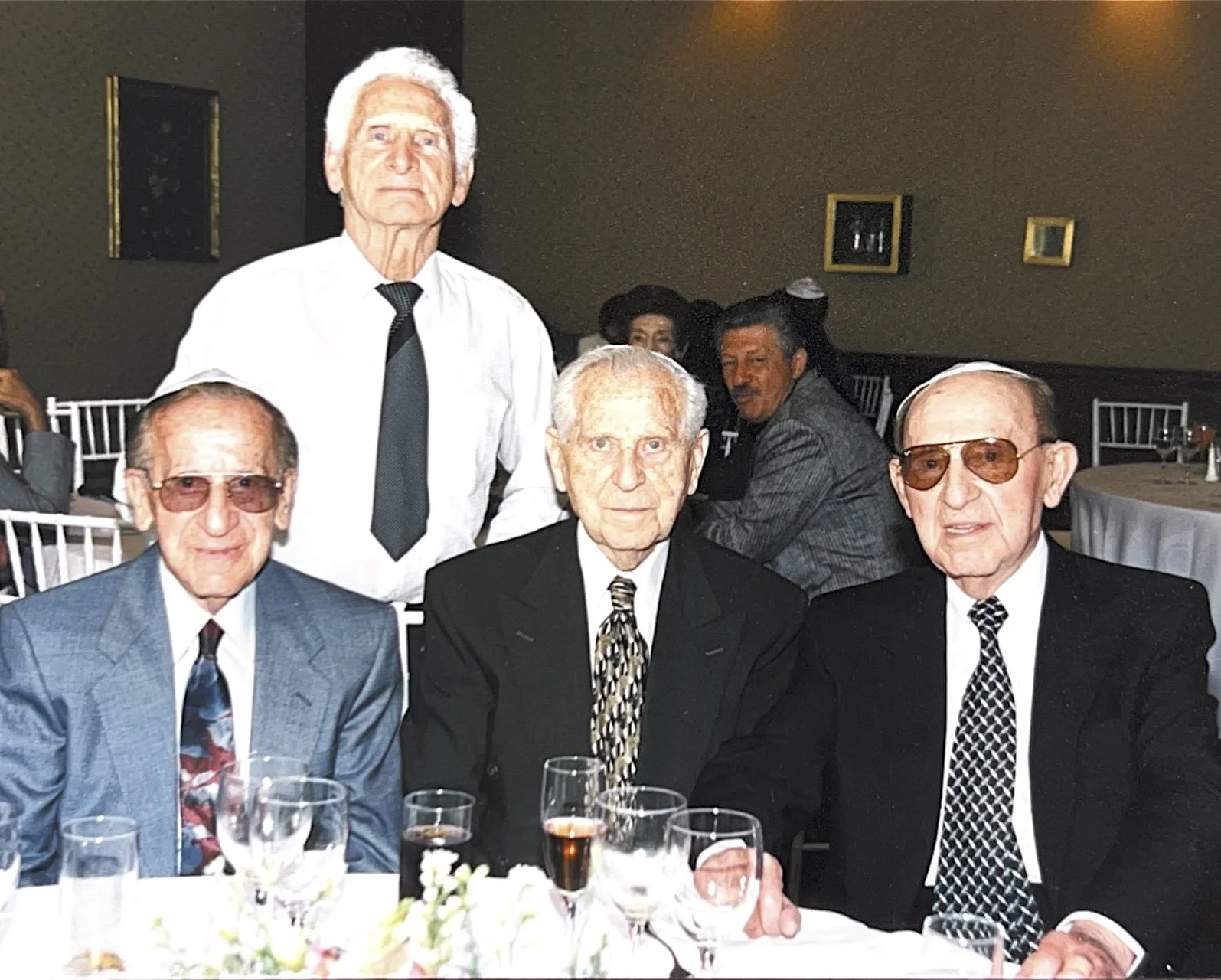
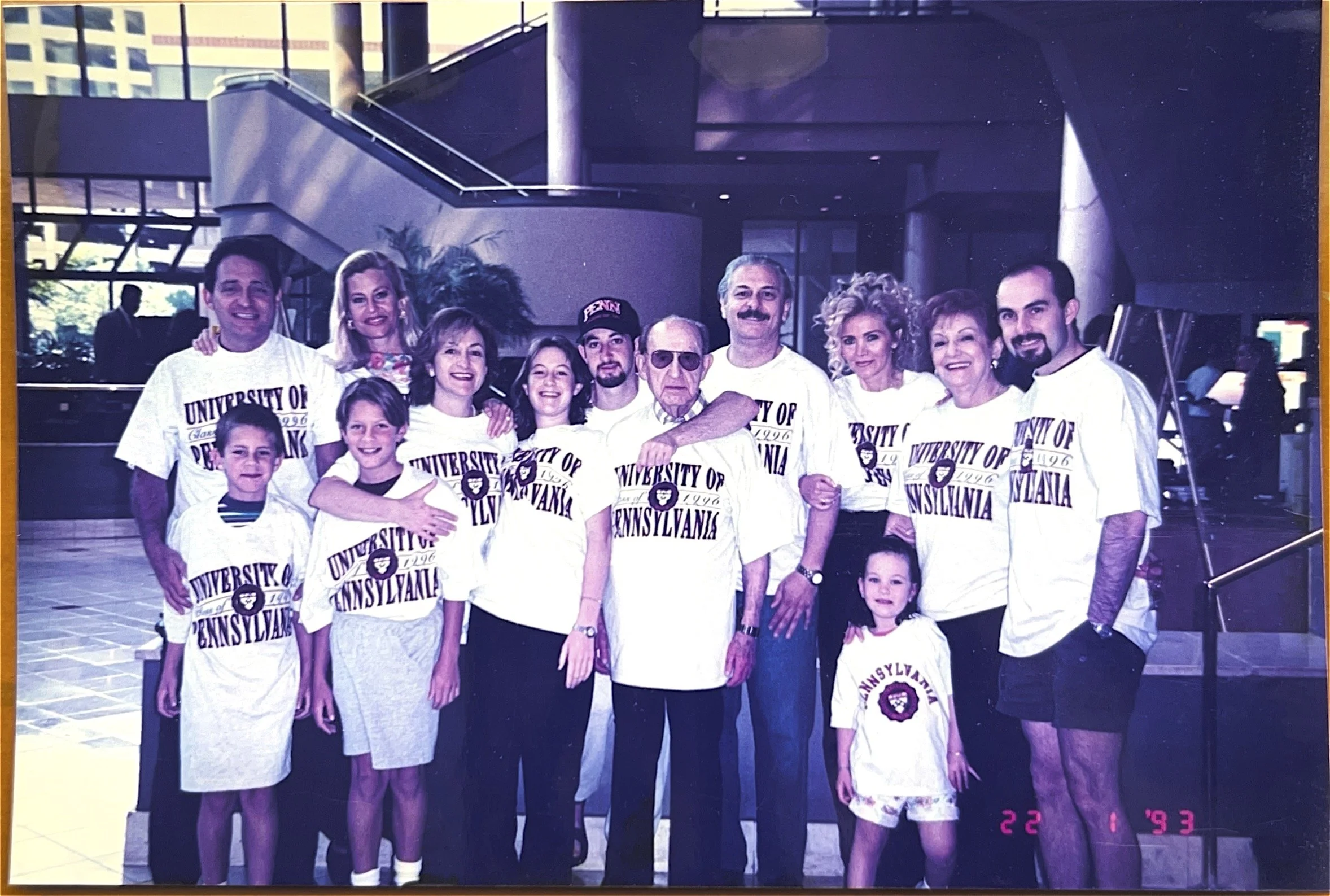
The nine surviving children of Shlomo and Esther Mondlak had a total of 18 children and many more grandchildren, including Heschel parent and Assistant Head of Early Childhood Elena Simpser. Elena’s grandfather was Hinde and Rachel’s brother Yehuda Arie Leib, known as Leon in Mexico. He and Perla Maya Behar, born in Mexico to parents who emigrated from Greece via Cuba at the turn of the century, had two children, Esther (Elena’s mother) and Joel – named after Leon’s mother and brother who perished in the Holocaust. They also raised Moises, a son Perla had with her first husband, who died when he was just 26, as their own. Among their descendants are Elena’s children, Heschel students Daniela Hannah, Naomi Pearl, and Alex Leib Alper.