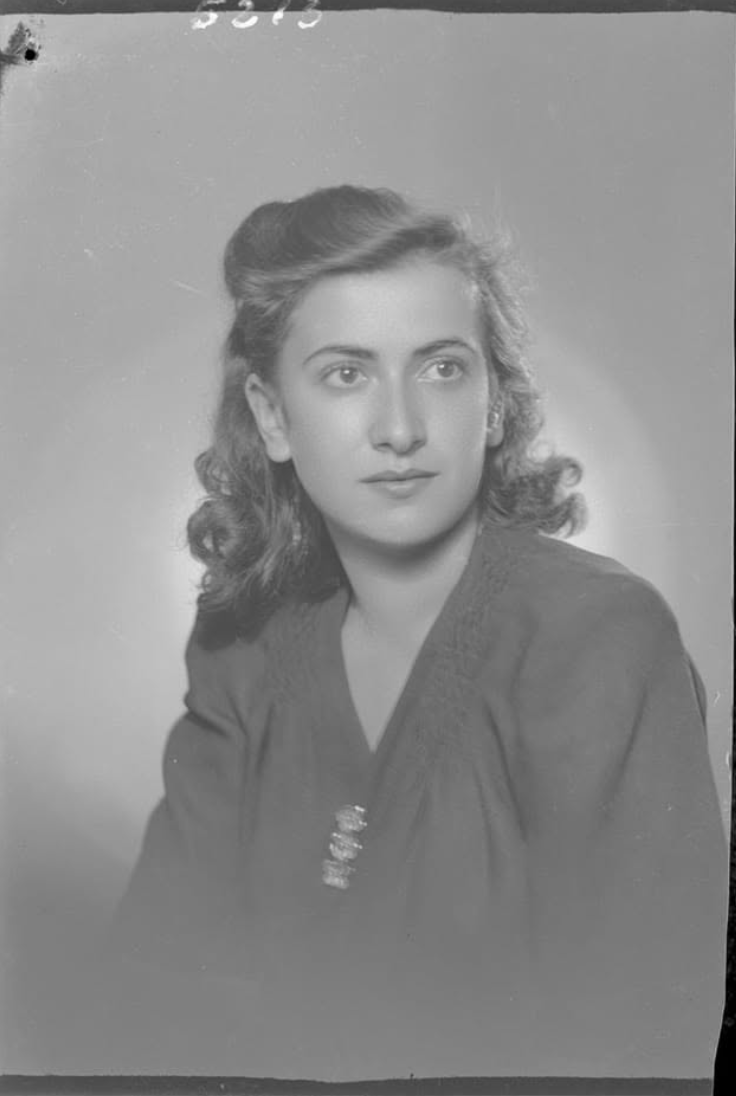
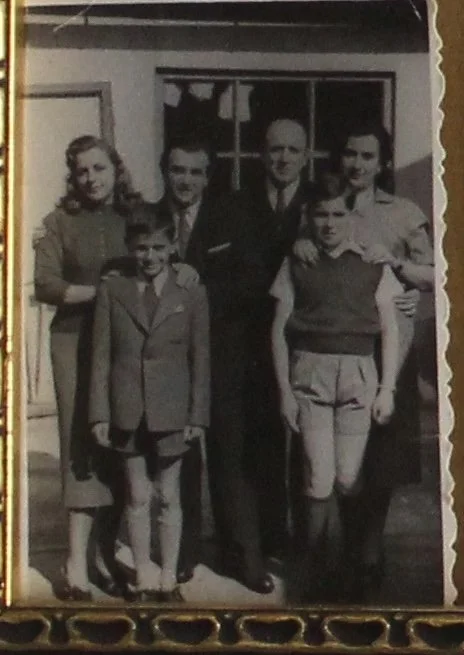
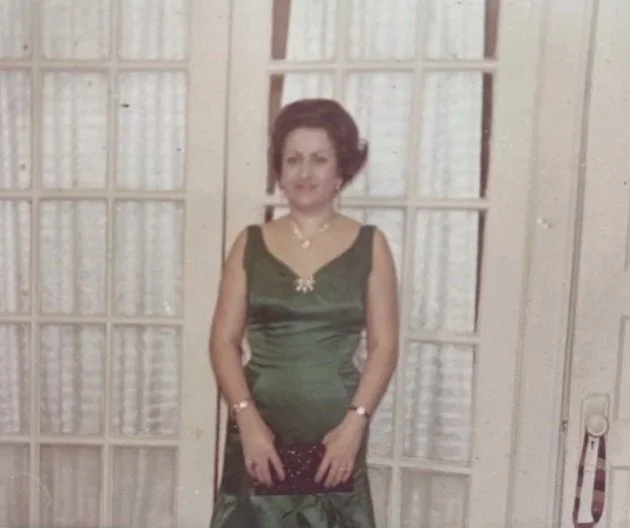
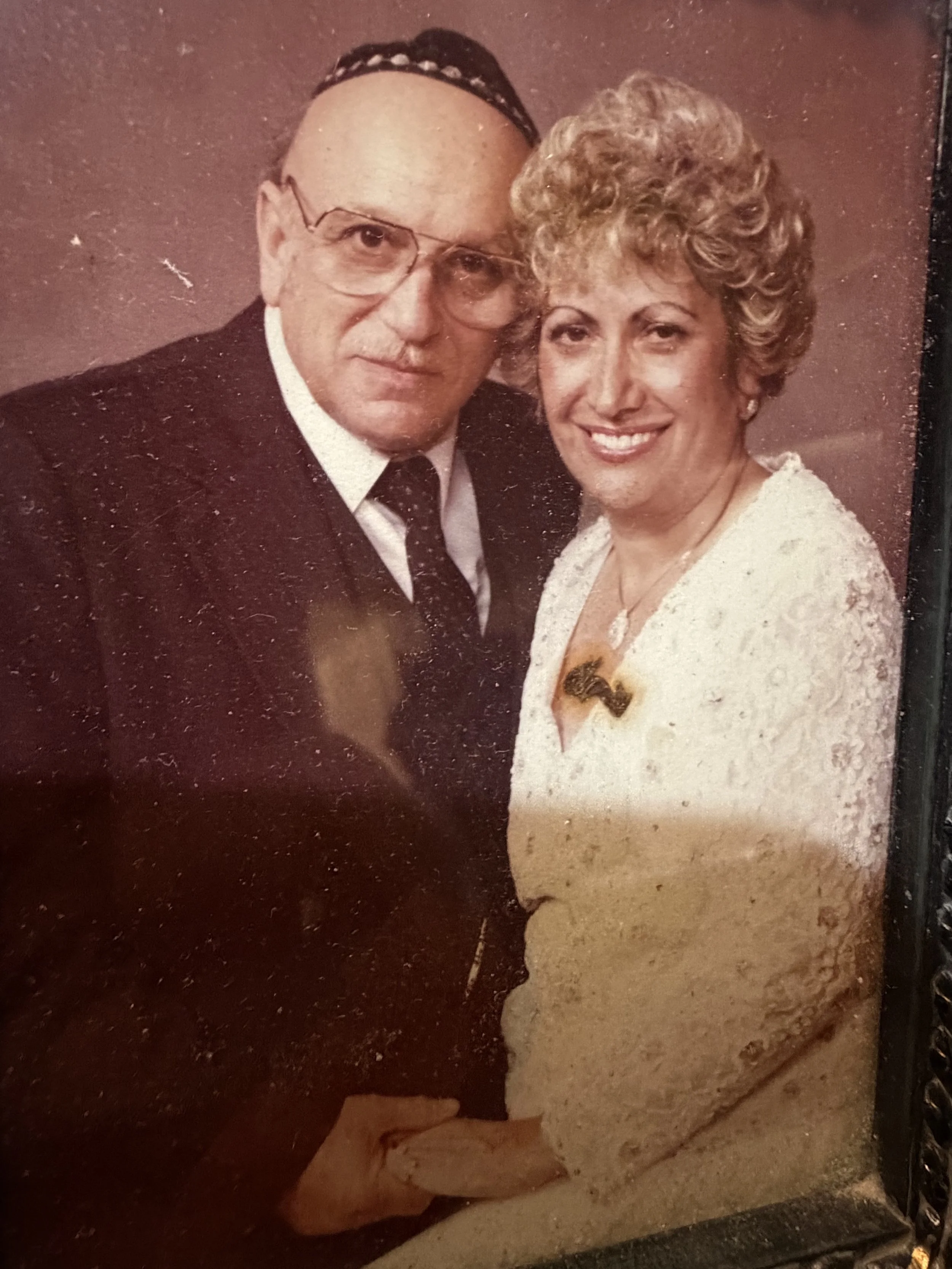
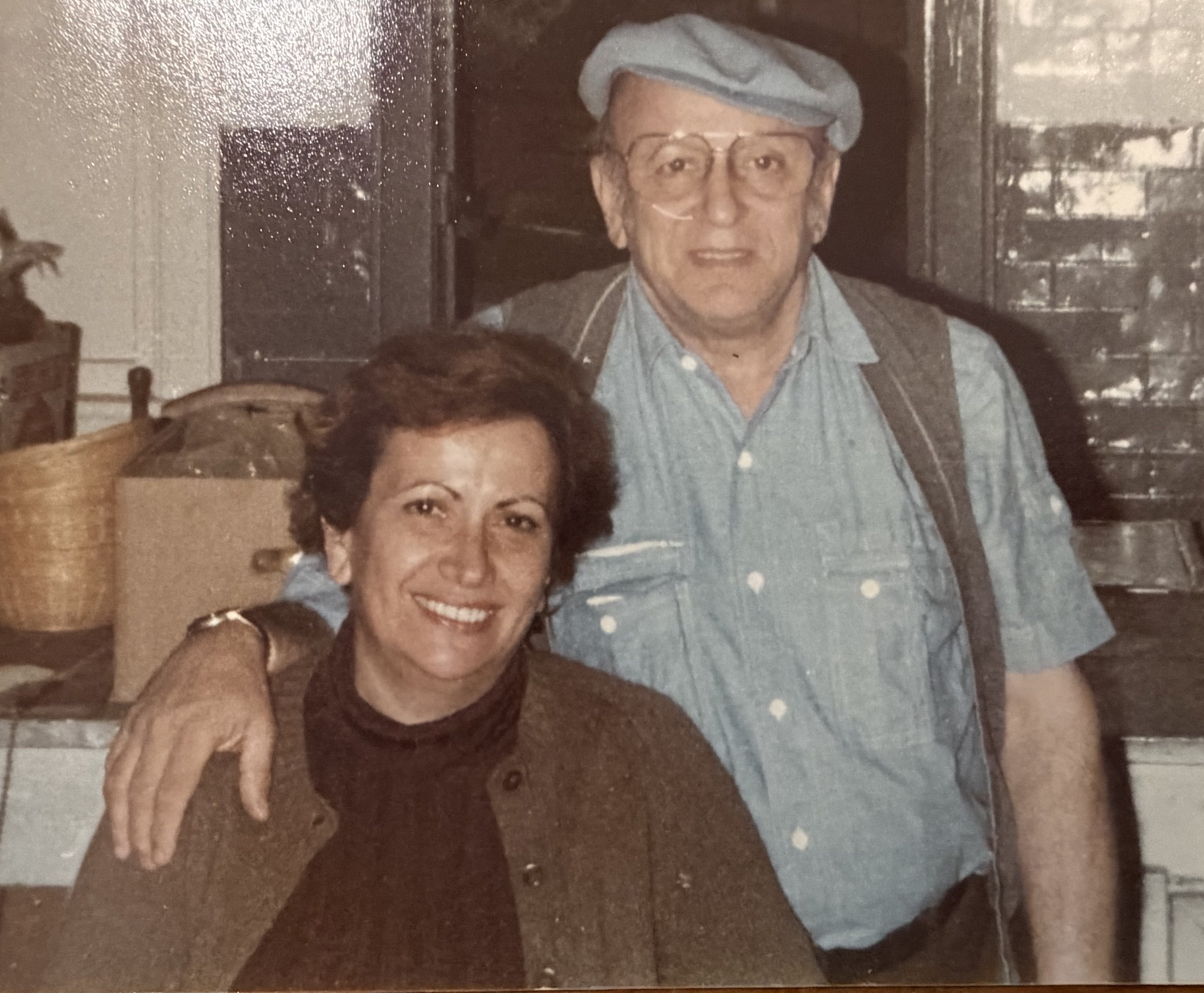
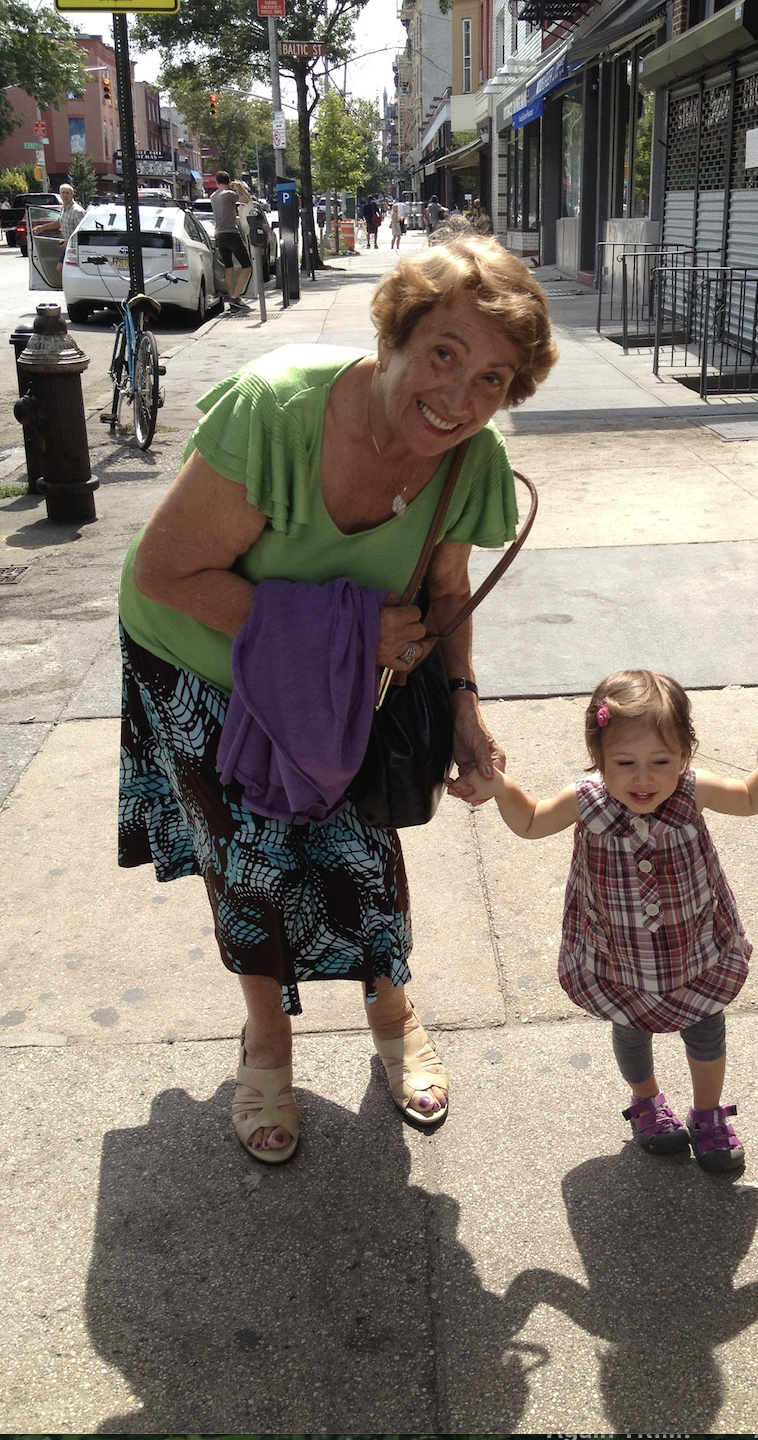
Stefania (later also known as Rita and called Stefi) Yarkony was born on November 4,1927 in Solduba, a small village in the vicinity of Satu Mare, then in Romania. (This region was part of Hungary until World War I and again from 1940-44, so the village and city are also known by their Hungarian names, Szoldobágy/Szatmár.).
Stefania’s parents, Serena (née Weiss) and Joseph Rosenblum, owned and operated a large farm, grocery and restaurant/bar. She had a younger sister, Adella, born in January 1936, and the family lived in a large house on their property, along with the girls’ maternal mother. They were modern orthodox but one of only three Jewish families in their village, so they often travelled to friends and family in the surrounding area.
The Rosenblum family didn’t experience much antisemitism until Hungary, an ally of Nazi Germany, annexed Northern Transylvania, the region where they lived, in August 1940. Anti-Jewish laws were enacted, making it forbidden for Stefania to go back to the high school she was attending in the city of Satu Mare after her second year. Still, the Jews who lived there remained relatively safe until March 1944, when Germany invaded Hungary in response to Hungary’s attempt to break its pact with the Axis powers. The Nazis immediately set about enacting the Final Solution, assisted by Hungarian authorities.
In May, the Jewish families in Solduba were taken with those from surrounding villages to the town of Ardud (Erdöd in Hungarian), where they stayed for a few days before being transferred to a ghetto in Satu Mare. There, they were among approximately 19,000 people crammed into a sealed area of the city's Jewish neighborhood measuring roughly half a square mile, sharing a small apartment with several other families. The ghetto was guarded by Hungarian gendarmes, and conditions inside were horrible, with severe overcrowding, hunger and disease. From May 19 to June 1, 1944, the ghetto was liquidated in a series of six transports, its inhabitants deported by cattle car to Auschwitz.
Upon their arrival at the camp, Stefania was separated from the rest of her family and never saw any of them again. Lined up for selection with the other women, she wanted to stay with her mother, grandmother and sister, but the notorious Nazi doctor Joseph Mengele commanded her to go to the other side. Along with other younger, able-bodied women without children who were spared immediate death, Stefania was taken to shower, had her head shaved, and was given a thin gray dress that she wore until liberation.
For approximately the next two months, she slept in stacked wooden planks in the Birkenau portion of the camp with the other prisoners, somehow surviving on meager daily rations of watery soup and dry bread. Most of her time there was spent standing in rows for the morning and evening roll calls, which lasted for hours. In the barracks, a woman named Yolan Weiss, who arrived at Auschwitz in another transport around the same time as Stefania, introduced herself as a cousin of her mother’s and subsequently kept an eye on her.
Stefania was one of a few thousands young women selected for work in Gelsenkirchen, Germany, the site of a Buchenwald subcamp, where they were tasked with clearing debris from allied bombings near the Gelsenberg factory. While performing this difficult slave labor, a heavy piece of debris fell on her leg, causing the area to swell up and ooze puss. She developed a fever and fainted a few days later, at which point she was sent by two compassionate prisoners who worked in the camp’s infirmary to a nearby Catholic hospital that treated and saved a number of Jewish women during the war. At one point, when the hospital was bombed and most people ran to a bunker, Stefania was unable to move but miraculously survived. However, she subsequently needed an operation because her infection had spread, and once she recovered, she was sent back to the labor camp.
Now, because of her injury, she was assigned to peel potatoes in the kitchen until, one time, when she was caught trying to steal some potatoes to feed her and her bunkmates. She was reassigned to working at a factory in nearby Sömmerda, where the female slave laborers operated dangerous machinery to manufacture parts needed for the German war effort. Stefania worked there for a month or two with her leg still severely injured until the prisoners were evacuated at the beginning of April 1945, as the Allied forces were advancing, and taken on a death march. Over the next month, they walked from morning to night, nearly 200 miles across central Germany and into Western Czechoslovakia, where they were liberated by Russian forces in early May. Most of the women were shot or died along the way; Stefania was among those who survived, sticking with her mother’s cousin, Yolan Weiss, who was with her for most of her journey, and four other girls they had bonded with.
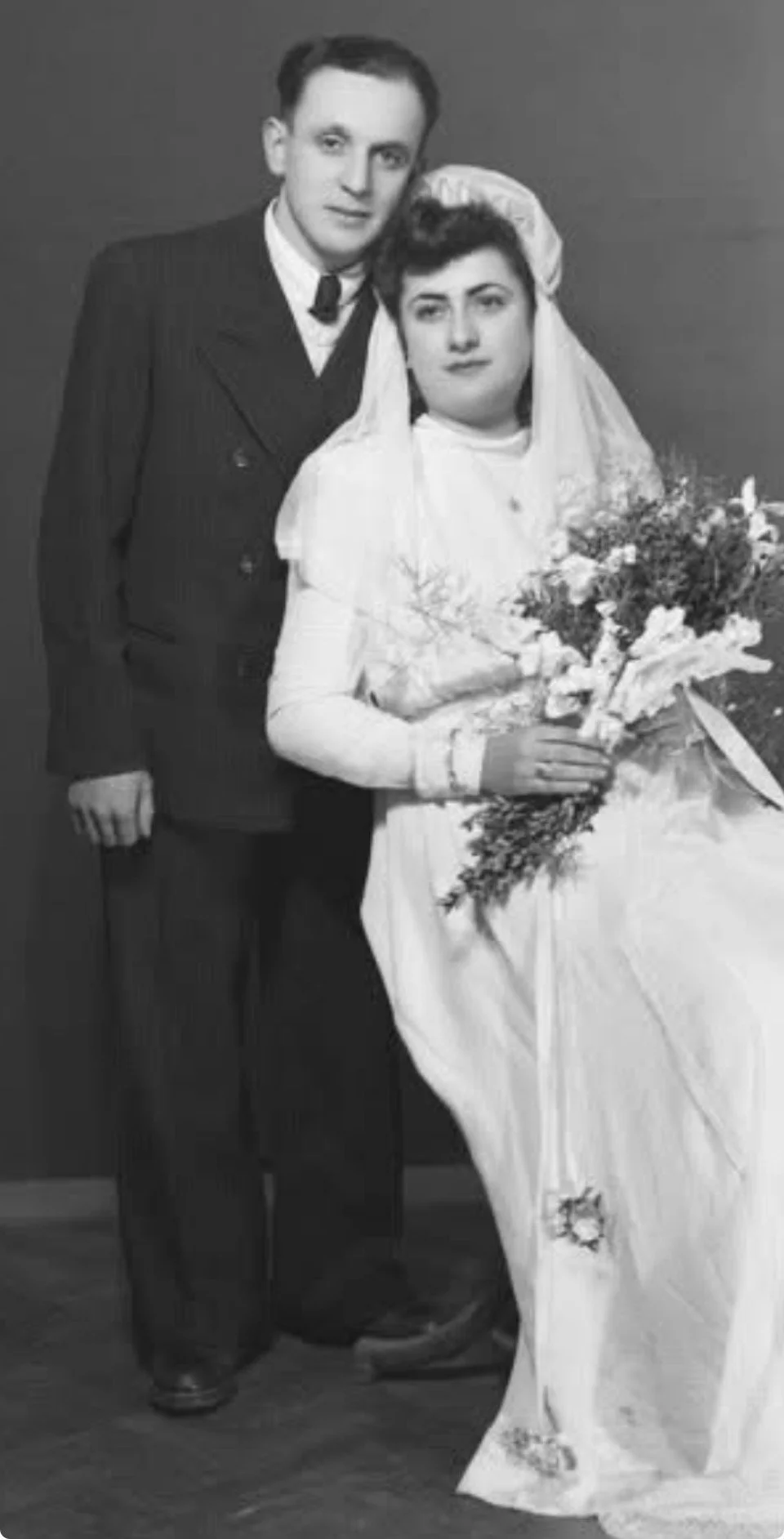
They made their way by foot to Brno, Czechoslovakia, which served as a way station, and from there returned home to Satu Mare by train. Stefania was devastated to discover her house empty and learn that all of her family members had perished. She travelled to meet up with a cousin who had survived in a nearby village and, from there, on to Satu Mare where two other cousins were living. On February 10, 1946, Stefi married Miklos Grün (better known as Mordechai or Mishu), a boy she had met before the war, when she was living with the Gutfreund family, relatives in Baia Mare (Nagybánya in Hungarian) and learning to make hats because she wasn’t allowed to return to school. After leaving his labor detail without a pass in order to try and see Stefi, he had been sent to a slave labor camp in Russia. They were reunited when he spotted her one night at the Jewish theater; he approached her during intermission and asked if she was the girl he remembered from before the war.
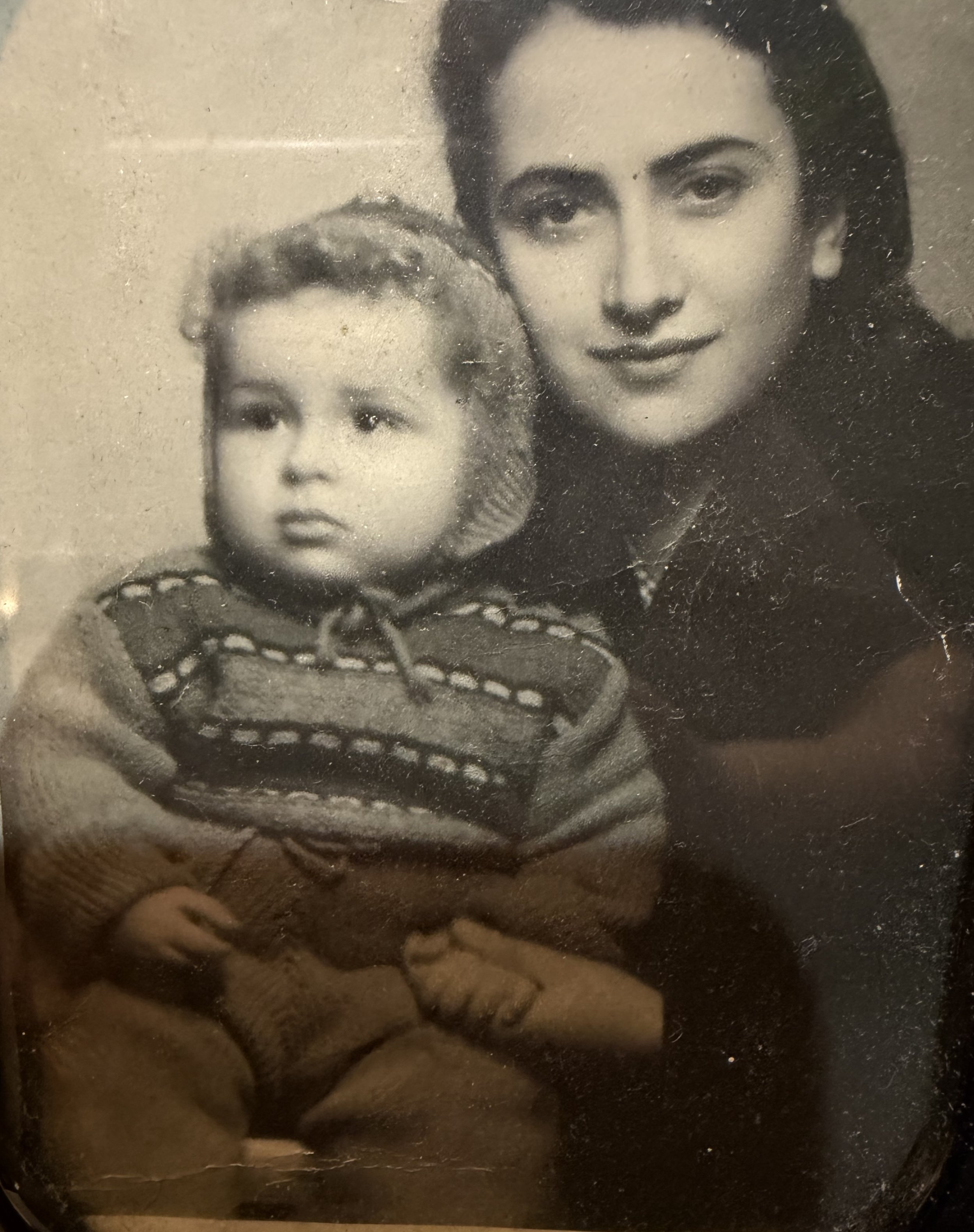
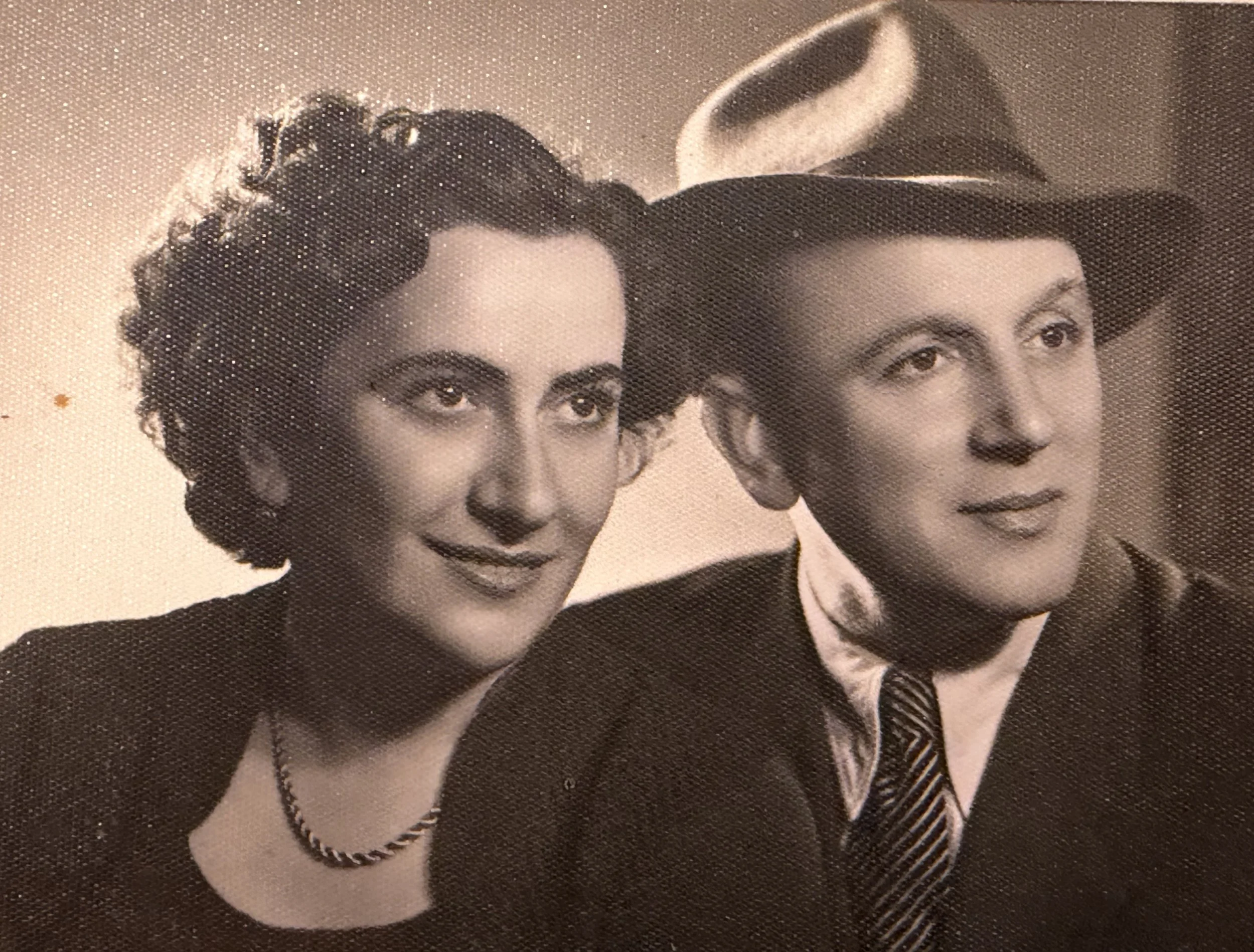
Mishu, who was born on May 18th 1922, and his younger sister, Clara, were the only survivors from their family of five. Their mother, Ilona (née Goidel), father, Mihaly/Michai, and older sisters, Leah (“Lily”) and Esty, were deported to and murdered at Auschwitz. On January 14, 1947, Stefania and Mishu had a son, Alfred. By the time Stefi and Mishu reconnected, he had opened a porcelain and picture framing store, but when the Communists took over the area, now part of Romania again, they confiscated it. He then became a skilled glazier, while she held various jobs, working as a hatmaker, wigmaker, beautician, and administrator. For a number of years, Mishu also operated small factories, first dealing in fabric, then glass, after he finished his daytime job. In 1959, after 12 years living under Communist rule, and being persecuted because of Mishu’s involvement with the local Zionist organization, they emigrated to Israel, where they changed their family name to Yarkony.
In August, 1962, they visited a paternal aunt of Stefi’s, who had emigrated to in America before the war and lived in Los Angeles. They ended up living briefly with this aunt in California, and then moved to New York, first living in Brooklyn and later Staten Island. Later in life, they relocated to Miami, Florida, where they remained active in the local Jewish community and were friends with many fellow survivors. During their time in the United States, Stefi and Mishu owned and operated several businesses, often catering to many Holocaust survivors, including the Garden Cafeteria on Manhattan’s Lower East Side, the Adler Hotel in Sharon Springs, New York, and the Rowe Motel in Miami Beach.
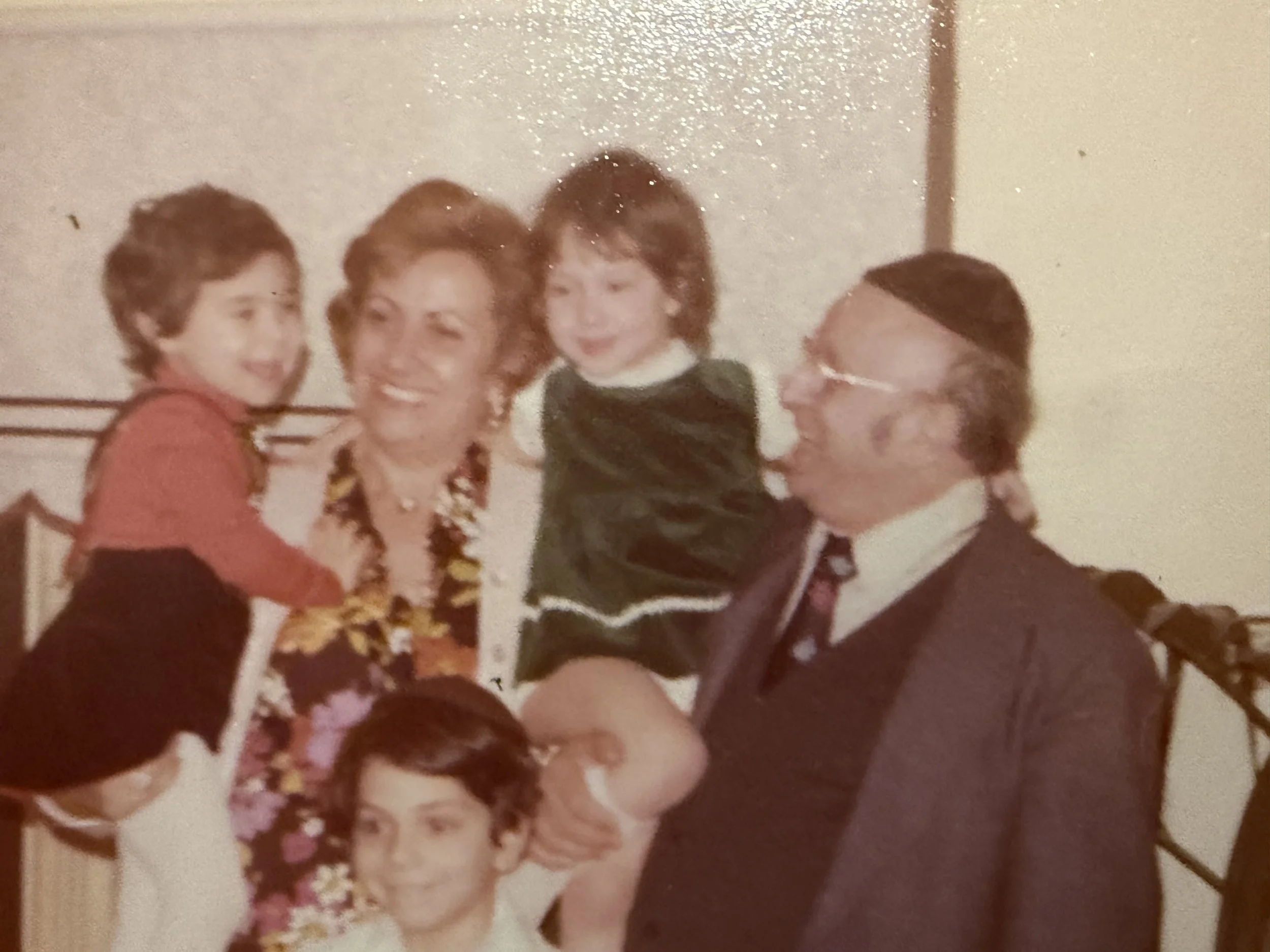
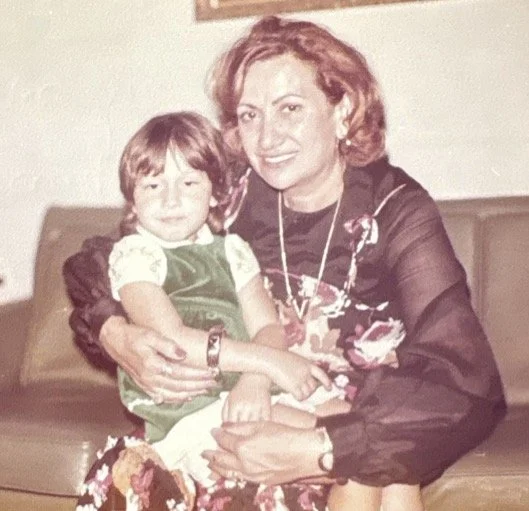
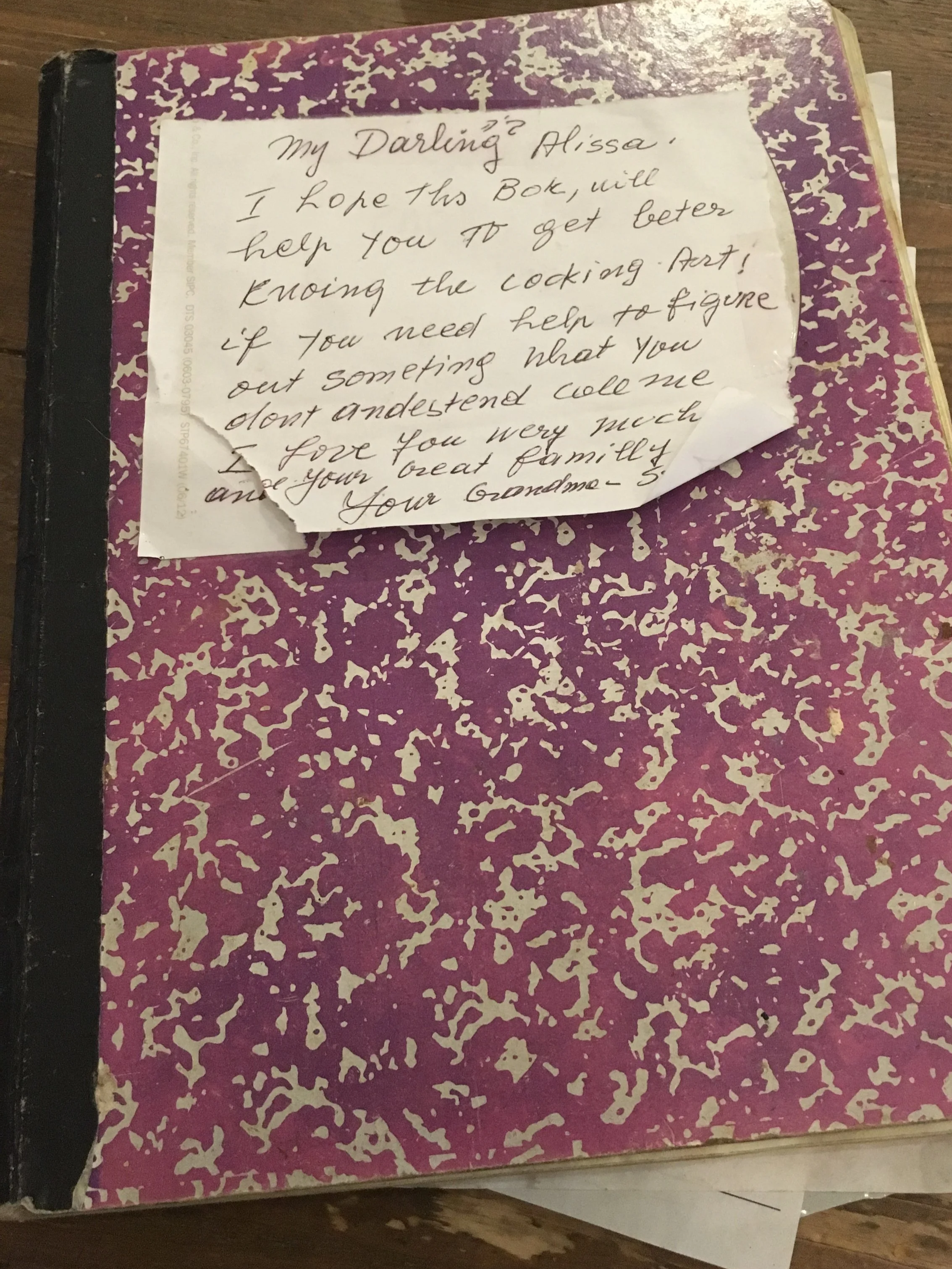
On March 30, 1969, their only son, known as Freddy, married Miriam Fischer, whose parents were also survivors from Transylvania and lived in the same neighborhood as them in Brooklyn. They had three children, Joel (“Yossy”), Alissa, and Nicole, and 11 grandchildren, including Heschel student Lila Gross. Mishu passed away on Sept 9th 1997 and Stefi passed away March 2, 2014. She was present for all three of her grandchildren’s weddings and lived to meet 9 of her 11 great grandchildren.
Stefania’s oral testimony, now in the collection of the United States Holocaust Memorial Museum, can be accessed here.